The Ancient Minoans and Phoenicians: Master Traders of the Eastern Mediterranean
Explore the rich history of the Minoans and Phoenicians, powerful seafaring civilizations that thrived in the Eastern Mediterranean from 2000 to 1100 BC. The Minoans, based in Crete, were renowned for their exquisite pottery and athletic culture, influencing Greek civilization through trade. The Phoenicians, originating from Lebanon, formed advanced city-states, became exceptional shipbuilders, and created colonies that spread their influence across Africa and the Mediterranean. Their phonetic writing system laid the foundations for the modern alphabet, representing a major advancement in cultural diffusion.

The Ancient Minoans and Phoenicians: Master Traders of the Eastern Mediterranean
E N D
Presentation Transcript
Minoans • Powerful seafaring people • 2000 to 1400 BC • Crete
Produced fine pottery • Traded over large area • Heavily influenced Greek culture • Graceful, athletic people • Sports: boxing, wrestling, bull leaping
End of civilization is mystery • Weakened by natural disasters • Susceptible to conquest
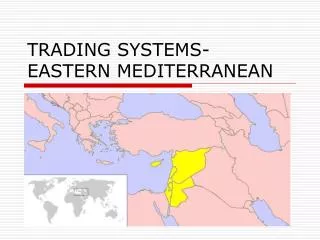
Phoenicians • Lebanon • Most powerful traders around 1100 BC • Formed city-states • Remarkable ship builders and seafarers
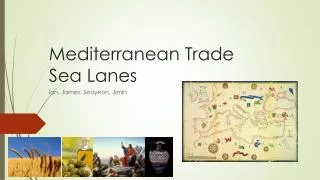
Ventured beyond Strait of Gibraltar • Sailed around Africa using Red Sea • Sidon and Tyre—most important city-states • Built colonies: Africa, Sicily, Sardinia, Spain • Carthage—biggest colony
Traded goods they got from other lands • Wine, weapons, precious metals, ivory, slaves • Produced red-purple dye and crafts
Invented writing system to record transactions • Symbol represented a sound • Phonetic • World alphabet comes from first two letters • Greeks were introduced and adapted it
Eastern cities were captured in 842 BC • Fled to colonies • Lasting contribution is alphabet • CULTURAL DIFFUSION!!!!
You are a Phoenician merchant trading purple cloth from Tyre for olive oil from Athens. You are stationed in Athens and must stay there to continue your business. But, you need to report back to Tyre about how much you have sold and what new supplies you need. How will you send this message?
http://edsitement.neh.gov/TestUploads/Phoenician_SoundOut.htmlhttp://edsitement.neh.gov/TestUploads/Phoenician_SoundOut.html