1 / 13

The Impact of Desert Training Center: A Historical and Geological Analysis

From 1942 to 1944, the Desert Training Center played a pivotal role in training over 1,000,000 men across 12 base camps. This analysis examines the geological features of the area, utilizing transect and soil pit samples from Iron Mountain to assess physical mixing validity. We explore sediment generation rates and their implications for piedmont formations, drawing connections to the larger pediment problem. Roger Hooke's work informs this investigation, contributing valuable insights into the area's geological history and ongoing research.

loman
Télécharger la présentation

The Impact of Desert Training Center: A Historical and Geological Analysis

An Image/Link below is provided (as is) to download presentation Download Policy: Content on the Website is provided to you AS IS for your information and personal use and may not be sold / licensed / shared on other websites without getting consent from its author. Content is provided to you AS IS for your information and personal use only. Download presentation by click this link. While downloading, if for some reason you are not able to download a presentation, the publisher may have deleted the file from their server. During download, if you can't get a presentation, the file might be deleted by the publisher.

E N D

Presentation Transcript


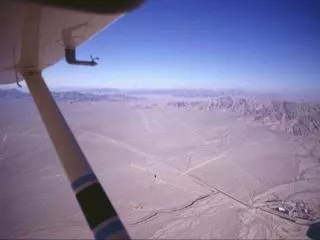
  1. Desert Training Center1942 to 1944 • Over 1,000,000 men • 12 base camps • Size of Vermont

  2. Valley Sample

  3. Transect Sample

  4. Iron Mountain transect samples

  5. Soil Pit Samples

  6. Is physical mixing of sample along transects valid?

  7. Sediment generation rates Calculation of sediment input onto piedmont

  8. Piedmont History How might this all apply to the pediment problem? Roger Hooke http://www.geology.um.maine.edu/user/Roger_Hooke/


More Related