Download
1 / 15
150 likes | 270 Vues
The French Revolution was fueled by a deep-seated resentment of the Three Estates system. The First Estate, comprised of clergy, collected taxes and owned 10% of land, yet represented less than 1% of the population. The Second Estate, the nobility, enjoyed privileges and exemptions, owning up to 25% of land with only 2% of the population. In contrast, the Third Estate, making up 97%, shouldered all taxes and included peasants and the bourgeoisie, who were increasingly inspired by Enlightenment ideas. This imbalance and oppression paved the way for the revolution.

E N D
FRENCH REVOLUTION 1789-1799
The Three Estates • First Estate • Clergy Collect taxes, operated schools and hospitals • Less than one percent of population • Owned 10 percent of land • Second Estate • Nobility • Born into rights and privileges • Tax exempt • Less than two percent of population • Owned 20-25 percent of land • Both hated enlightenment ideas
Third Estate • Rest of society • Mostly peasants • Paid ALL taxes • 97 percent of population • Bourgeoisie • Owned means of production • Lawyers, doctors, etc. • Exploited by clergy and nobility
Life of a peasant • No food • Starvation • Few privileges • Servants = skilled and unskilled • Laborers • Responsible for taxes • Wars, palaces, used to support wealthy
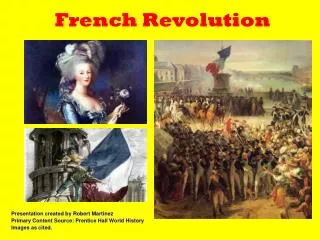
Louis XVI and Marie antoinette • King and Queen of France 1774-1792 • Supported American Revolution, 1776 • Represented absolute monarchy • Inherited debt • Bad spending habits • Palace of Versailles
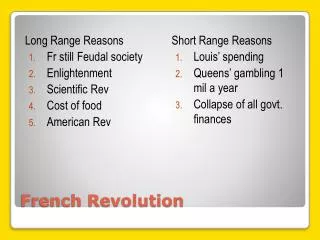
Long term Causes • Corrupt & inconsistent leadership • Massive debt • Absolute monarch • Resentment of 3rd Estate privileges • Paid largest sum of taxes • No voice in government • First and Second Estate would overrule Third Estate • Each estate had one vote • Enlightenment Philosophy • “Freedom of the Individual” • Voltaire, Diderot, Turgot • Saw effects of American Revolution
Short Term Causes • Government debt • Did not tax upper class • War debt, tax evasion • Poor harvest • Bad weather in 1780s led to crop failure • Increase in the price of bread • Rejection of financial reforms • Attempted to force nobles to pay taxes, failed
Estates general • One vote per estate • Clergy and nobility joined to outvote Third Estate • Versailles May 1789 • First meeting since 1614 • Third Estate formed National Assembly • Sign of revolution
National assembly • Third Estate established own government • 1789 • Inspired by Abbe Sieyes • French Roman Catholic
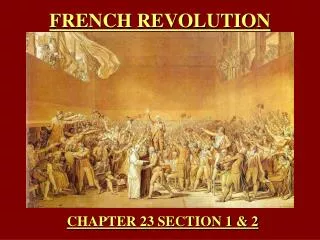
Confrontation with king • Louis XVI locked Third Estate out of National Assembly’s meeting hall • Moved to nearby tennis courts for meetings • Tennis Court Oath • Vowed not to leave • King reversed position • Ordered first two estates to join National Assembly • Called French troops to Paris
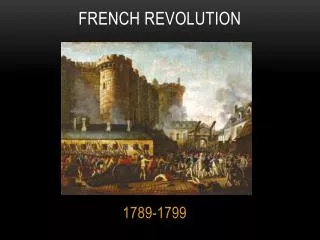
Storming of the Bastille • Rioting in Paris, early July • Louis fired Necker • Lowered Third Estate taxes • Paris mobs seized weapons from armory • Attacked Bastille • Prison and armory: symbol of oppression • Soldiers refused to stop attack • Bastille destroyed
Declaration of the rights of man and citizen • Adopted by National Assembly, 1789 • Enlightenment ideas • Outlined basic freedoms held by all • Asserted sovereignty of the people • “Liberté, Egalité, Fraternité”