The Liberation of Latin America: The Role of Simon Bolívar and the Emergence of Caudillos
120 likes | 242 Vues
This text explores the complex journey of Latin America's liberation from colonial rule, focusing on the pivotal roles of Spain and Portugal. It delves into the desires for independence amidst strict restrictions imposed by the Spanish government, inspired significantly by events like the Haitian Revolution. The narrative highlights Simon Bolívar, "The Great Liberator," and his campaigns leading to the formation of Gran Colombia. It also examines the emergence of caudillos, the challenges of establishing liberal governments, and the influence of British and American interests, shaping the region's political landscape in the 19th century.


The Liberation of Latin America: The Role of Simon Bolívar and the Emergence of Caudillos
E N D
Presentation Transcript
Latin America ITS LIBERATION AND ITS LIBERATOR
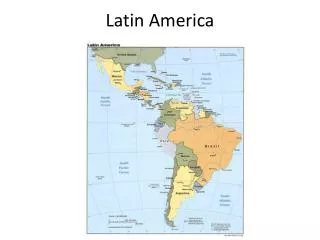
colonization • Two major players • Spain • Portugal • Spain • West • Portugal • East
Want for independence • Why? • Spanish government applying restrictions • Inspiration • Haitian Revolution • Criollo • Locally born • Pure or mostly Spanish ancestry
Want for independence • Junta • a small group ruling a country, especially immediately after a coup d'état and before a legally constituted government has been instituted. • a council. • a deliberative or administrative council, especially in Spain and Latin America
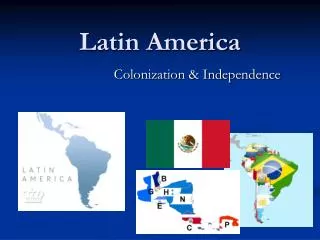
Simon bolivar • The Great Liberator • Military command in New Granada • 1821 • Campaigns into Venezuela • 1822 • Campaigns into Ecuador • 1821 • Gran Columbia formed • Became president • Columbia, Venezuela, Ecuador, and Panamma
Simon bolivar • 1824 • Peru • Became the dictator • Congress of Upper Peru • August 6, 1825 • Republic of Bolivia created
caudillos • Political military officers • After independence • Created a liberal government • Policy of liberalism could not be sustained • Civil governments fall • Military intervention • Civil rule to authoritarian military rule • Mestizos • European and Native American heritage • Criollo didn’t want their political participation
CAUDILLOS • Lack of middle class • No middle class • No one to uphold liberalism • Those in government an elite • 1825 • Caudillos took over the government
Latin America & informal empire • The British • Controlled the sea routed between Europe and South America • Resisted the threat of the restoration of colonial rule • Obtained raw materials and agricultural produce from Argentina, Chile, Peru and Brazil • Republics imported British manufactured goods • From 1850s British technology used to build railroads and other engineering projects
Latin America and informal empire • The Americans • Monroe Doctrine • President James Monroe • Committed Washington to resisting any European intervention • Using protective traffics to allow for the establishment of its own industries • 1890s and onwards • America intervened both politically and militarily to preserve their own economic interests • America intervened both politically and militarily to preserve their own economic interests