High-Temperature Performance of Thin Film PV: Soiling Impacts and Cleaning Innovations
70 likes | 197 Vues
This research examines the high temperature performance of thin film photovoltaic modules compared to crystalline silicon, emphasizing their energy yield advantages in the desert Southwest climate. It discusses the implications of soiling on energy output, tailored cleaning methods for site specifics, and highlights innovations in automatic cleaning solutions. The findings indicate typical annual soiling losses of less than 4%, contributing to water conservation. The relevance of utility-scale projects and design philosophies in the Middle East are also explored, along with emerging trends in PV technology and applications.


High-Temperature Performance of Thin Film PV: Soiling Impacts and Cleaning Innovations
E N D
Presentation Transcript
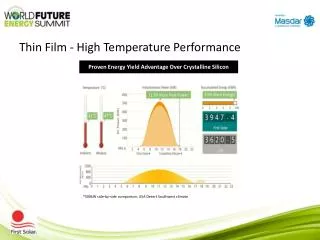
Thin Film - High Temperature Performance Proven Energy Yield Advantage Over Crystalline Silicon All modules rated and labeled at STC Additional First Solar energy for same nameplate power *500kW side-by-side comparison, USA Desert Southwest climate
Soiling and Cleaning Mani and Pallai, Renewable and Sustainable Energy Reviews 14 (2010) 3124-3131
Soiling and Cleaning Cleaning Methods and Frequency are tailored to site specifics Frameless module gives better cleaning surface Dry-cleaning method • Typical expected annual soiling loss < 4% • Encourages water conservation • Provides confidence in Energy Predictions Various new solutions for automatic cleaning entering market Soiling Monitoring Station can help quantify site conditions
Water Consumption – PV Advantage • Water ~ power demand
Pilot Plants set Precedent for Utility Scale Design and Execution • UAE: Masdar City 10MW / DEWA 13MW • Saudi Arabia: KACARE program PV in the Middle East – 2013 Trends to Watch • Pricing decline flattens; Renewed focus on BOS Innovation and Quality • Balance Sheet Matters • Outdoor Rated Equipment • Behind-The-Fence Utility Design Philosophy • Lessons from Mature Markets will Transfer • LCOE to dominate: PV to gain share • Energy storage is rarely required • Unconventional applications • Water desalination / pumping • Offgrid / Microgrid / Hybrid PV Plants • Enhanced Oil Recovery