The Circulatory System
The circulatory system, also known as the cardiovascular system, plays a vital role in maintaining life by transporting oxygen and nutrients to cells, while removing waste products. It consists of the heart, arteries, veins, and capillaries. The heart comprises four chambers, including two atria and two ventricles, functioning as two pumps. The right side pumps oxygen-poor blood to the lungs (pulmonary circulation), while the left side pumps oxygen-rich blood to the body (systemic circulation). Blood vessels include arteries, veins, and capillaries, each serving specific functions in circulation.

The Circulatory System
E N D
Presentation Transcript
The Circulatory System Also called cardiovascular system
Function of the Circulatory System • Transport substances such as oxygen and nutrients to the cells. • Remove wastes from cells.
Consists Of: • Heart • Arteries, veins, capillaries • Blood
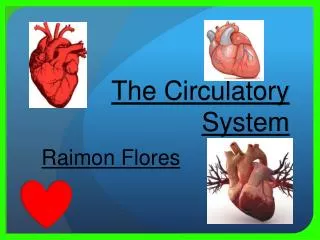
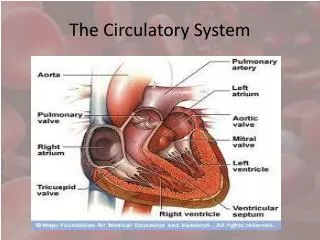
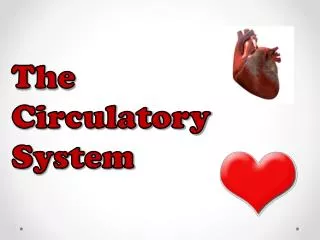
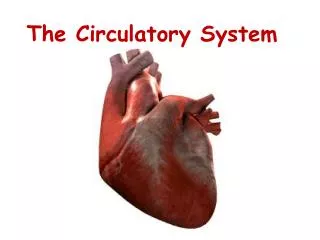
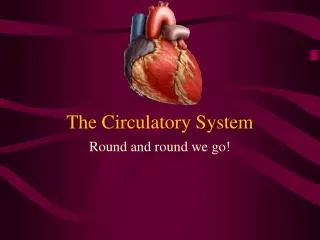
Anatomy of the Heart • Atrium – The upper chamber, which receives the blood. • Ventricle – The lower chamber, which pumps blood out of the heart. • The human heart has four chambers including two atria and two ventricles.
Circulation Through the Body • The heart functions as two separate pumps: • Right Side - Pumps oxygen-poor blood to the lungs. • Known as pulmonary circulation • Left Side - Pumps oxygen-rich blood to the rest of the body. • Known as systemic circulation
Circulation Through the Heart • Blood enters the heart through the right and left atria. • As the heart contracts, blood flows into the ventricles. • Then out from the ventricles to either the body or the lungs. • Valves – Flaps of connective tissue that prevents blood from flowing backwards. • Exist between the atria and ventricles. • Also exist at the end of the ventricles.
Three Types of Blood Vessels • Arteries • Large vessels that carry blood AWAY from the heart to the tissues of the body • Except for the pulmonary arteries, all arteries carry oxygen-rich blood.
Three Types of Blood Vessels 2. Veins • Large vessels that return blood TO the heart.
Three Types of Blood Vessels 3. Capillaries • Smallest blood vessel; brings nutrients and oxygen to the tissues and absorbs carbon dioxide and waste products • The walls of capillaries are only one cell thick, and most are so narrow that blood cells must pass through them in single file.