Large Sample Chi Square Test for RR in Cohort Studies
200 likes | 319 Vues
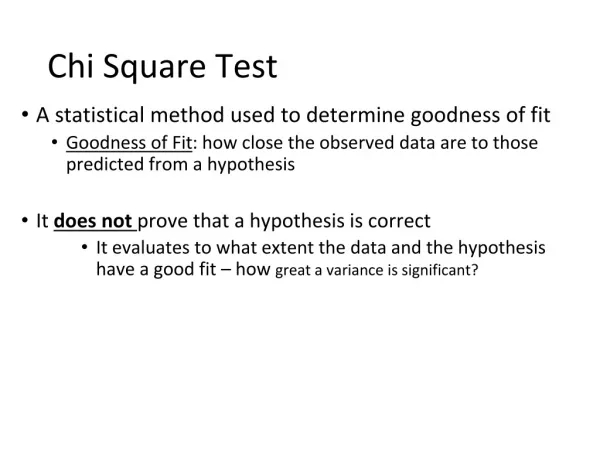
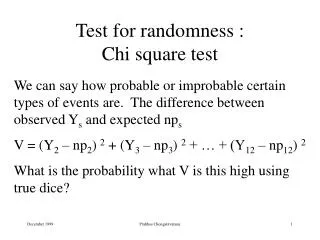
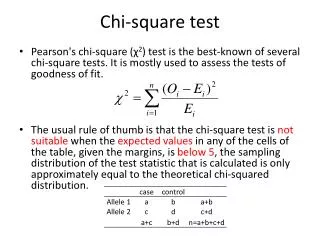
This article explores the significance of using the chi-square test in cohort studies to evaluate relative risk (RR). It highlights the challenge posed by one-sided hypotheses, where large values of the chi-square statistic may arise from either large positive or large negative values of the normal statistic. Two methods for calculating the P-value are discussed: utilizing the Z distribution and partitioning the right tail area of the chi-square distribution. Understanding these aspects is crucial for accurate statistical analysis in epidemiological research.


Large Sample Chi Square Test for RR in Cohort Studies
E N D
Presentation Transcript
But there is a problem here: 1 Sided HA Large values of a chi square statistic that might indicate a significant result can occur from either large positive or large negative values of the normal statistic.
Another way to compute P value: Divide the area in the right tail of the chi square distribution in half.