Download
1 / 28
310 likes | 530 Vues
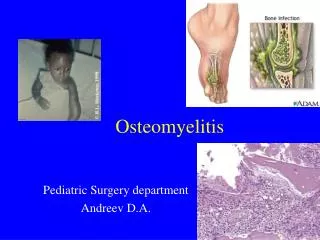
Osteomyelitis is an infection of the bone and bone marrow that can occur in acute, subacute, or chronic forms. This condition has various classifications based on the method of occurrence, such as hematogenous and direct transmission. Multiple systemic and local factors can predispose individuals to osteomyelitis, including diabetes, malnutrition, and immune suppression. Diagnosis involves imaging techniques while treatment may include antibiotics and surgery based on the severity and underlying conditions. Awareness of symptoms and timely intervention is crucial for effective management.

E N D
Osteomyelitis Reşat ÖZARAS, MD, Prof. Infection Dept. rozaras@yahoo.com
OSTEOMYELITIS • Infection of bone marrow and and adjacent bone Several classifications
The duration of the disease • Acute osteomyelitis • Subacute osteomyelitis • Chronic osteomyelitis
The way of occurence 1 - Hematogenous osteomyelitis 2 – Osteomyelitis secondary to direct transmission - Any vascular disease may/not associate 3 - Chronic osteomyelitis (necrotic bone)
Anatomical classification • Stage 1: medullary osteomyelitis • Stage 2: superficial osteomyelitis • Stage 3: localized osteomyelitis • Stage 4: diffuse osteomyelitis
SYSTEMICAND LOCAL FACTORS Systemic Local MalnutritionChronic lymphedema Renal, hepatic failure Venous failure Diabetes mellitus Vascular insufficiency Chronic hipoxia Arteritis Alcohol and/or tobacco use Tissue scar Malignant disordersRadiation fibrosis Advanced age Neuropathy Immune suppression HIV/AIDS
ETIOLOGY • Babies (<1 year) • Group B streptococci • S. aureus • E. coli • Children(1 - 16 years) • S. aureus • S. pyogenes • H. influenzae • Adult(> 16 years) • S. epidermidis • S. aureus • P. aeruginosa
EPIDEMIOLOGY • Acute hematogenous osteomyelitis: a disorder of childhood period • A trend to increase: traffic accidents, increasing rates of orthopedic interventions. • Adults– Vertebtal osteomyelitis (Spondylodiscitis)
CLINICAL FEATURES AcuteHematogenousOsteomyelitis - Systemicdisorder - No structural bone changes - A history of lessthan 10 days - No previousepisodes SubacuteHemotogenousOsteomyelitis -Systemicdisorder (not as severe as theacute form) -Bone changes -A history of morethan 10 days - No previousepisodes Chronicosteomyelitis -Systemicdisordermay/not associate -Bone changes -There is/arepreviousepisode(s).
Clinical Features • Depends on the way of development (hematogenous, direct, from adjacent tissues), patient's characteristics and the period of the disorder • Hematogenous osteomyelitis • fever, fatigue, restlessness • Tenderness, pain, and edema on the affected site • Decreased mobility of the affected extremity • Muscle spasms
From adjacent tissue; pain, redness, swellings, a draining sinus from the site of trauma, wound, or operation • Dorsal/back pain in vertebral osteomyelitis .
RADIOLOGICAL FINDINGS Plain X-ray; • Diagnosis and the course of the disease • Increase in density of the surrounding soft tissues (first 10 days) • Periostal reaction (after 10 days) • Bone loss in subacute period
Bone scan • For early diagnosis
Computed tomography Sentitive for soft tissue inflammation as well. Diagnosis and follow-up of the therapy
Magnetic Resonance • Soft tissue and bone marrow inflammation • Early diagnosis
Differential Diagnosis • Rheumatic fever • Cellulitis • Ewing’s sacroma • Septic arthritis • Osteosarcoma • Eosinophilic granuloma • Thrombophlebitis
Vertebral Osteomyelitis • Frequent etiology: • S. aureus, • M. tuberculosis, • Brucella • Gram-negative bacilli (Gastrointestinal or urinary system) • Postoperative • Pain and disability • May be indolent and fever may not be seen
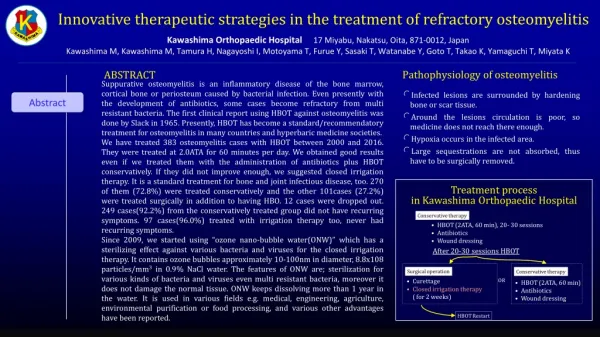
Tx • Antibiotics • Surgery • Underlying disorder
Antibiotics Meticilin-sensitive Staph. → Cefazolin or Sulbactam/ampicillin Meticilin-resistant Staph →Vancomycin or teicoplanin Brucella → Rifampin+doxycycline Tuberculosis → INH+RIF+PZA+EMB
Children: Acute hematogenous Adult: Chronic (hematogenous---from adjacent tissues…