Understanding Earthquakes: Key Vocabulary and Concepts for Students
Dive into the fascinating world of earthquakes with Lesson 10 of AMSTI! This lesson introduces essential vocabulary, including terms like earthquake, aftershock, and fault. Learn about the Earth's structure, including the crust and mantle, and what makes up the lithosphere. Discover the roles of seismologists and how the Richter and Mercalli scales measure earthquake magnitude and damage intensity. Perfect for students seeking to understand Earth science and the dynamics of seismic activity.

Understanding Earthquakes: Key Vocabulary and Concepts for Students
E N D
Presentation Transcript
Introducing Earthquakes AMSTI: Lesson 10
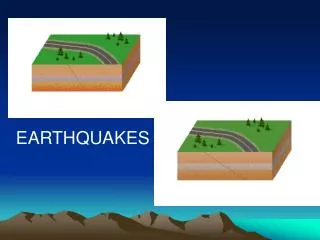
Lesson 10 Vocabulary • Earthquake- the shaking & vibrating of the earth • Aftershock-an earthquake that happens after a main earthquake • Crust-the outermost layer of the earth • Fault-a fracture (crack) of the earth’s crust where there has already been some movement
Lesson 10 Vocabulary • Mantle- a layer of the earth that lies beneath the crust • Lithosphere- the cool, solid outer shell of the earth consisting of the crust and uppermost part of the mantle • Plate- a large, mobile segment of the earth’s lithosphere • Plate Boundary- a place where pieces of broken lithosphere meet
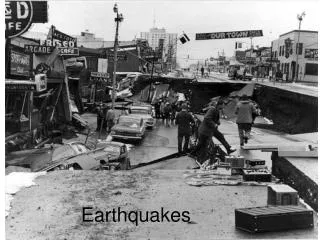
Lesson 10 Vocabulary • Seismologist- a scientist who studies earthquakes • Precursor- something that helps scientists predict when an earthquake might occur • Richter Scale- measures the magnitude or strength of earthquakes • Mercalli Scale- describes the intensity of earthquake damage to buildings & other structures