

SlideServe
Menu
Préférences
© SlideServe · v2026

AARHUS UNIVERSITY

nicole avatar
13 diapositives · 288 Views · Aug 25, 2014

In the competitive landscape of global academia, attracting advanced human capital transcends financial incentives. Insights from Nobel Laureates, including Jens Christian Skou and Dale T. Mortensen, emphasize the importance of career development opportunities, autonomy in research, and creating appealing working environments. Aarhus University recognizes the need for supportive structures for early-stage researchers, varied pathways for career advancement, and a proactive recruitment strategy focused on visibility and branding. These strategies are essential for fostering excellence in education, research, and innovation.
AARHUS UNIVERSITY - slide 1
01 / 13AARHUS UNIVERSITY
1 / 17

Télécharger la présentation

AARHUS UNIVERSITY
Une image / un lien ci-dessous est fourni (tel quel) pour télécharger la présentation

Politique de téléchargement : le contenu du site vous est fourni TEL QUEL pour votre information et votre usage personnel ; il ne peut être vendu, concédé sous licence ni partagé sur d’autres sites sans l’accord de son auteur.Le contenu vous est fourni TEL QUEL, pour votre information et votre usage personnel uniquement. Téléchargez la présentation en cliquant sur ce lien. Lors du téléchargement, si vous ne parvenez pas à télécharger une présentation, l’éditeur a peut-être supprimé le fichier de son serveur.Pendant le téléchargement, si vous ne parvenez pas à obtenir une présentation, le fichier a peut-être été supprimé par l’éditeur.

F I N

Plus de contenu associé

Transcription de la présentation
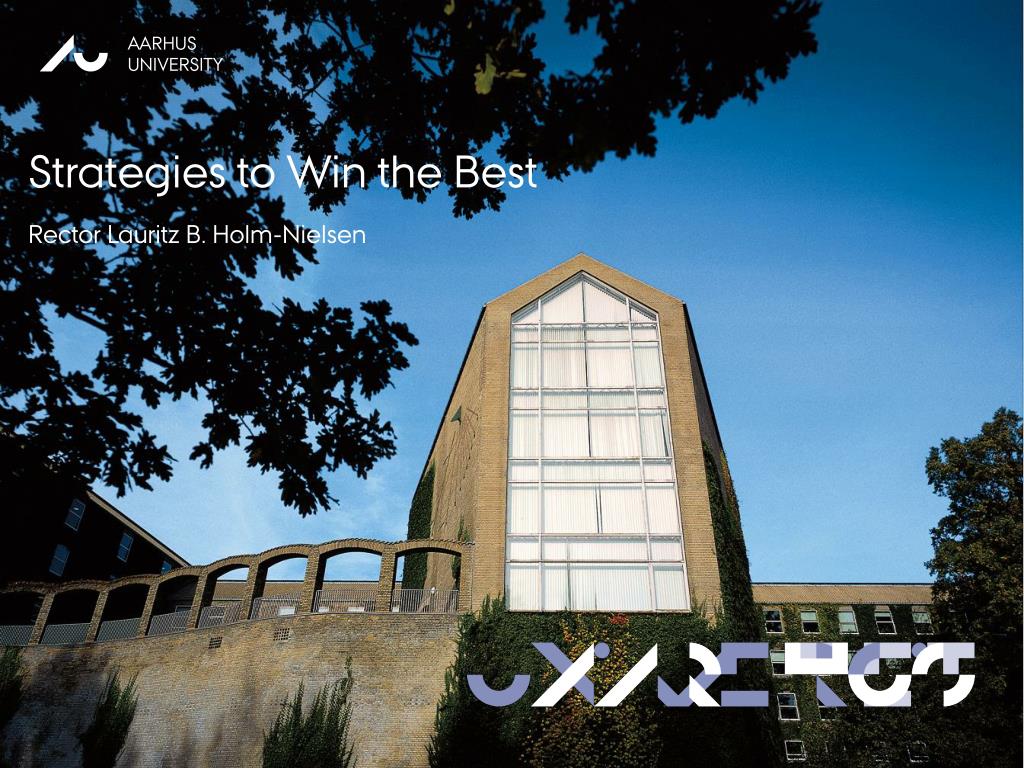
  1. AARHUS UNIVERSITY Strategies to Win the BestRector Lauritz B. Holm-Nielsen

  2. For the world’s top universities the real challenge is not funding but competing for the most advanced human capital… Nobel Laureate Jens Christian Skou, Aarhus University The Nobel Prize in Chemistry, 1997

  3. Scientific staff increasingly on the move Share of foreign-born human resources in science and technology, aged 25-64 years in EU-27 and selected countries, 2006 Source: Eurostat HRST data base

  4. Who will be the winners and losers in the global competition for the best qualified staff? • Attracting researchers is not simply a question of pecuniary rewards • Opportunities for career development • Autonomy to pursue the unexpected • Well-financed positions • Importance of creating attractive research environments Source: Holm-Nielsen & Thorn, 2008

  5. How do different university systems perform? Evaluated dimensions • Degree of independence • Guidance received from superior or coworkers • Salary • Holiday entitlement • Health-care benefits • Maternity or paternity leave • Retirement plan • Total hours worked per week Source: Nature Vol 465 24 June 2010

  6. The Modern University The Humboldt University The Triple Helix University Talent development PhDs Research Education Post docs Students Knowledge exchange Professors Research projects Studies Research programmes Lifelong learning Contracts

  7. Advanced career Early career Post doc PhD Early recruitment Principles guiding career development at Aarhus University • Clearly defined pathways • Support for high-flying individuals • Incentives for scientific staff to work across scientific disciplines • Recognition of alternative career tracks (e.g. industrial PhD program) • Early warning when permanent employment is unlikely to be realized

  8. Advanced career Early career Post doc PhD Early recruitment Early identification of research talent Duration of PhD education vary from 3-5 years 5 + 3 Bologna Classic 4 + 4 3 + 5 Bologna Danese

  9. Nurturing early-stage researchers • Award potential and not always exclusively an extensive achievement record • Provide young staff freedom to conduct independent research • Assistance from research support office in applications for competitive funding • Allocate time for training and international collaboration Nobel Laureate Dale T. Mortensen, NWU and Aarhus University, The Nobel Prize in Economics, 2010

  10. Use of financial incentives • Strategic use of the university research foundation • Grants for screening potential PhDs and post docs • Starting grants for young potential researchers • Support for the recruitment of highly accomplished scientists and foreign professors Francis Fukuyama, Stanford and Aarhus University

  11. Recruitment and visibility • Need to avoid “cannibalism” by promoting brain circulation and refraining from charitable recruitment • Post all research positions- including entry-level posts, openly and internationally • Headhunting and active use of search committees • Engagement in employer branding

  12. Capacitybuilding in developingcountries • Well-managed universities in developing countries bring: • Local knowledge production and innovation • Local availability of highly skilled graduates • How may university sectors contribute to capacity strengthening within research and higher education in the most efficient and constructive way?

  13. Thank youRector Lauritz B. Holm-NielsenE-mail: rector@au.dk