Download
1 / 15
150 likes | 276 Vues
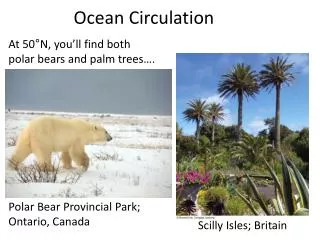
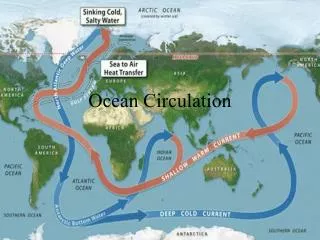
Oceanic circulation plays a crucial role in regulating the Earth's climate by redistributing heat across various regions. It requires significant energy to alter water temperature, leading to stable current patterns that transport cold and warm water. Phenomena such as El Niño and La Niña illustrate the periodic changes in ocean currents, affecting precipitation patterns, especially in the Americas. Additionally, seasonal changes driven by the Earth’s axial tilt and solar angle significantly influence climate variations throughout the year, marking distinct seasons.

E N D
Oceanic Circulation Patterns • It takes a great deal of energy to change the temperature of water
Because of this water has a dramatic effect upon the climate of different parts of the Earth Galapagos Penguin
Most of the time currents remain relatively stable carrying cold water to some regions and warm water to others Upwelling at Monterey Bay
El Nin~o • Normal Ocean circulation is sometimes interrupted by periodic changes • 6-18 month changes in cold and warm water in the Pacific
Winds strengthen and push warm water east • More rain in southern US and equatorial South America • La Nina is just the opposite
Pacific Decadal Oscillation • 20-30 year change in location of warm water masses in the Pacific
Other effects upon Climate • Topography – Rain shadow effect • Solar maximum • Large scale volcanic eruptions - cooling
Seasons • 23.5 degree tilt on axis • Angle of sun’s rays changes during year • Divide into four parts of the year • Winter solstice, vernal equinox, summer solstice, and autumnal equinox