Download
1 / 22
220 likes | 347 Vues
The circulatory system plays a vital role in transporting essential materials such as oxygen, carbon dioxide, nutrients, and waste throughout the body. It regulates body temperature and consists of blood, arteries, veins, and capillaries. Blood comprises red blood cells, white blood cells, plasma, and platelets, each serving crucial functions from oxygen transport to infection defense and clotting. The anatomy of blood vessels and the heart is essential for maintaining a healthy circulatory system. Learn about its structure, functions, and the importance of blood components.

E N D
Function • Transport materials • O2, CO2, waste, vitamins, nutrients, H2O • Regulate body temperature • Includes: Blood, arteries, veins, capillaries
Blood • Red Blood Cells • Carry oxygen to all cells • White Blood Cells • Fight infections • Plasma • Liquid part of blood; mostly water • Platelets • Help to clot the blood
Red Blood Cells • Live 4 months • No nucleus • Small size • Make up approximately 40% of blood volume • Carry O2 to the cells of your body • Return to the lungs to excrete CO2
White Blood Cell • Largest of the three types of cells • Responsible for fighting infections or germs • Rather short lifecycle, living from a few days to a few weeks • One drop of blood can contain 7000 to 25000 white blood cells • If an invading infection fights back and persists, that number will significantly increase
Plasma • Is a sticky, pale yellow fluid mixture of water, protein and salts • Is 95% water • Makes up 55% of human blood • Helps maintain BP, carries blood cells, nutrients etc. • Can be collected from a normal healthy donor twice weekly
Platelets • assist in blood clotting • Smallest of blood cells • Make up 5% to 7% of blood volume • Form a mesh net to form clots in the Blood to help stop bleeding
Blood Facts • Blood makes up about 7% of your body's weight. • An average adult has about 14 to 18 pints of Blood. • One standard unit or pint of Blood equals about two cups. • Blood carries oxygen and nutrients to all of the body. • Blood carries carbon dioxide and other waste products back to the lungs, kidneys and liver for disposal. • Blood fights against infection and helps heal wounds. • One unit of donated whole Blood is separated into components before use (red Blood cells, white Blood cells, plasma, platelets) • There are four main Blood types: A, B, AB and O.
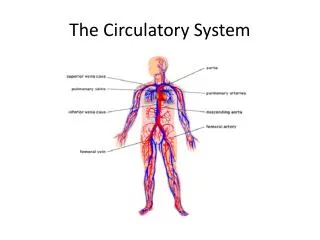
Blood Vessels • Arteries • Carry blood AWAY from the heart (usually oxygenated) • Walls are thicker to withstand the greater pressure • Veins • Carry blood TOWARD the heart (usually deoxygenated) • Walls are thinner because of lower pressure • One way valves • Capillaries • Tiny, thin-walled blood vessels that allow the exchange of gases, nutrients and waste • Some only fit one cell through at a time
Blood Vessels • Oxygenated (red) • All artieries except 2 • Pulmonary Arteries carry blood to the lungs • Deoxygenated (blue) • All veins except 2 • Pulmonary veins carry blood from the lungs to the heart
Arteries to Veins Arteries ArteriolesCapillariesVenule Vein Oxygenated blood Deoxygenated blood
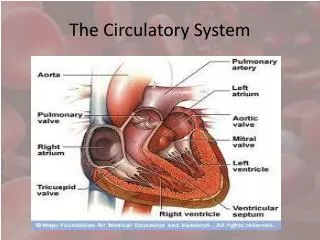
Heart • Structure: • 2 atria • Receive blood from body and pump to ventricles • Thin walled • 2 ventricles • Pump blood to body tissues • Thick, muscular walls • Right side pumps deoxygenated blood to the lungs to get oxygenated • Left side pumps oxygenated blood to the body
Left side Right side
Did you know? • The only artery in the body that pumps deoxygenated blood is the pulmonary artery. • The pulmonary artery pumps blood from the heart to the lungs to be oxygenated!
Video: Circulatory System 1 • Video: Blood Doping • Video: Blood Doping3 • Video: Blood Doping2