Download
1 / 9
150 likes | 487 Vues
Learn how atoms combine to form molecules, cells, tissues, organs, organ systems, and organisms in the human body. Discover the functions and relationships between different levels of structural organization.

E N D
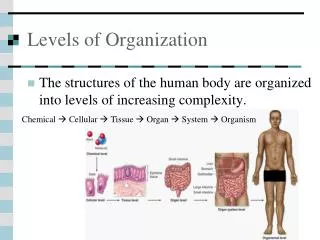
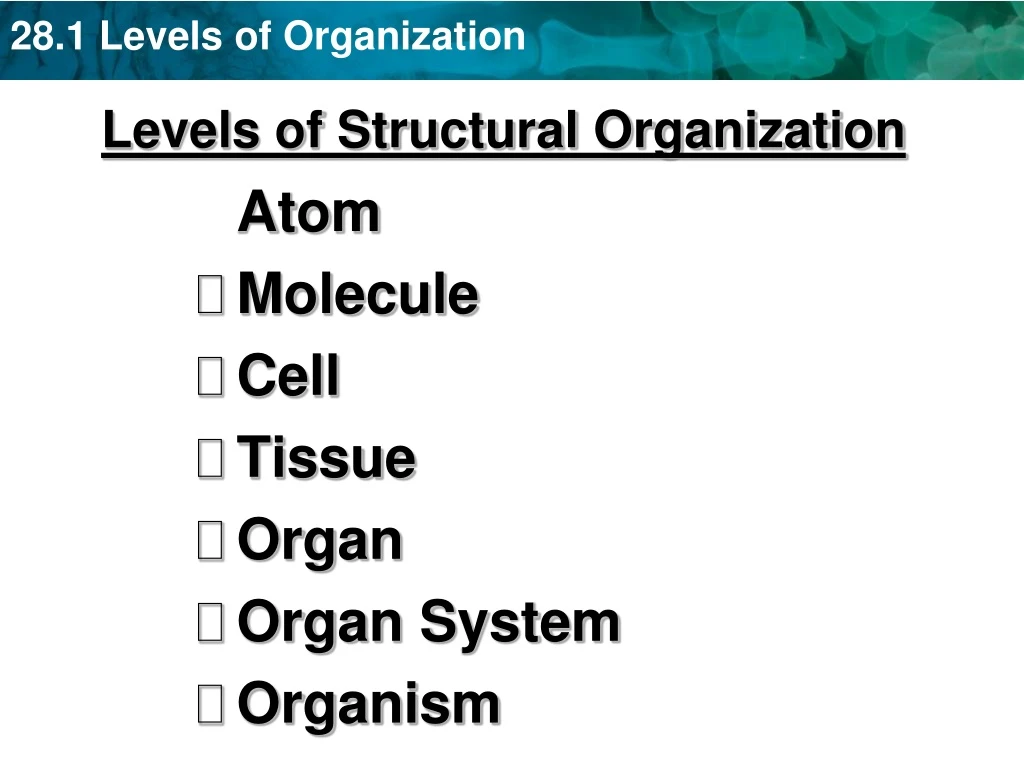
Levels of Structural Organization Atom • Molecule • Cell • Tissue • Organ • Organ System • Organism
Examples: Atom Molecule Cell Tissue Organ Organ System Organism • carbon • phospholipid • nerve cell • nervous tissue • brain • nervous system • human
1. Atoms combine to form molecules Atoms Molecule
2. Molecules form cells Cell Molecules
3. Cells form tissues Similar cells with a common function form tissues • There are 4 basic tissue types in the human body: • Epithelial • Nervous • Muscular • Connective
cell tissue 4. Specialized cells function together in tissues, organs, organ systems, and the whole organism. • Specialized cells perform specific tasks. • Tissues are groups of similar cells working together. • epithelial tissue • connective tissue • muscle tissue • nervous tissue
5. Tissues form organs • Two or more tissue types form an organ An organ is a structure that performs a specific function for the body
6. Organs form Organ Systems • A group of organs which work together for a common purpose is an organ system Nervous System Brain, Spinal Cord, etc.