
SlideServe
Menu
Préférences
© SlideServe · v2026

Judicial Branch

raya-anderson avatar
13 diapositives · 356 Views · Nov 19, 2014

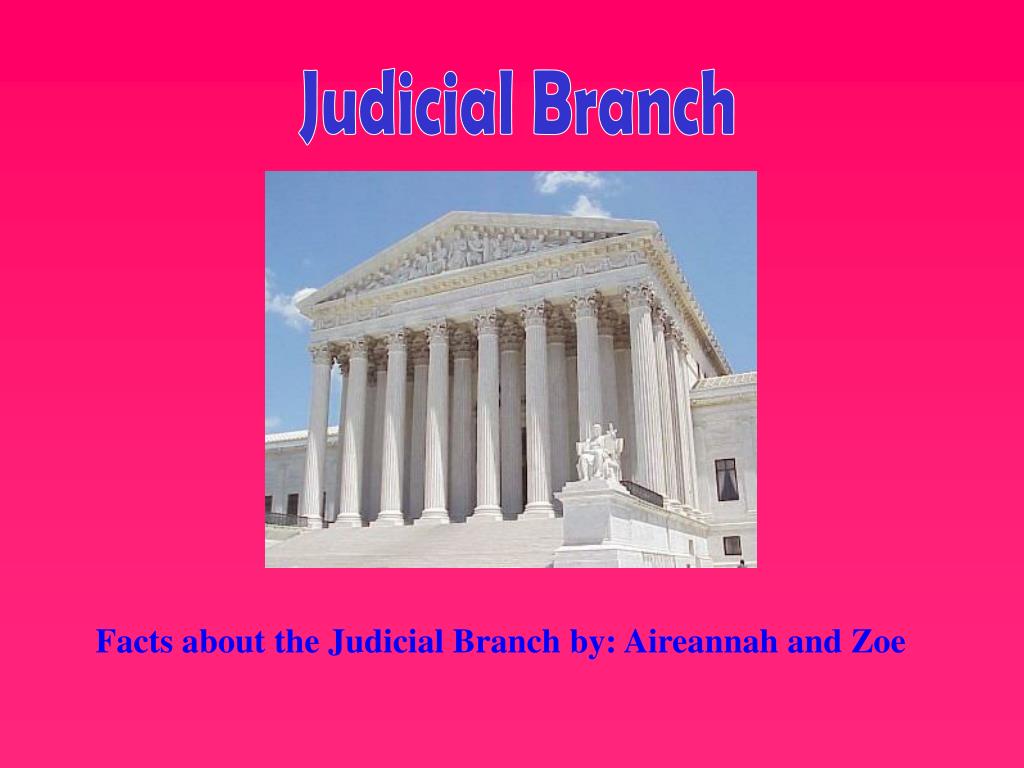
Judicial Branch. Facts about the Judicial Branch by: Aireannah and Zoe. 1. Which article in the U.S Constitution established the judicial branch of government with the creation of the Supreme Court?. Article 3 in the U.S. Constitution established the Judicial Branch.
Judicial Branch - slide 1
01 / 13Judicial Branch
1 / 17

Télécharger la présentation

Judicial Branch
Une image / un lien ci-dessous est fourni (tel quel) pour télécharger la présentation

Politique de téléchargement : le contenu du site vous est fourni TEL QUEL pour votre information et votre usage personnel ; il ne peut être vendu, concédé sous licence ni partagé sur d’autres sites sans l’accord de son auteur.Le contenu vous est fourni TEL QUEL, pour votre information et votre usage personnel uniquement. Téléchargez la présentation en cliquant sur ce lien. Lors du téléchargement, si vous ne parvenez pas à télécharger une présentation, l’éditeur a peut-être supprimé le fichier de son serveur.Pendant le téléchargement, si vous ne parvenez pas à obtenir une présentation, le fichier a peut-être été supprimé par l’éditeur.

F I N

Plus de contenu associé

Transcription de la présentation
  1. Judicial Branch Facts about the Judicial Branch by: Aireannah and Zoe

  2. 1. Which article in the U.S Constitution established the judicial branch of government with the creation of the Supreme Court? Article 3 in the U.S. Constitution established the Judicial Branch.

  3. 2. What is the power the judiciary has to “checks and balance” the legislative and executive branches? The law starts at Congress, goes to the executive branch, then goes to the legislative branch. If the law passes through Congress and the President and the Supreme Court doesn’t agree then they can negate the law.

  4. 3. What founding document is the Supreme Court often called to interpret through its rulings? The U.S. Constitution is the founding document the Supreme Court uses to interpret their rulings.

  5. 4. If the Supreme Court rules a law passed by Congress as unconstitutional, what happens to the law? Congress Building Supreme Court The law goes back to the Congress to make it new and improved.

  6. How many Justices serve on the Supreme Court (at one time)? There are eight justices and one chief justice on the court at one time. Chief Justice

  7. 6. For how long can Supreme Court Justices remain on the bench? Life term provided they have good behavior.

  8. 7. In what month and on what day does the Supreme Court convene, or meet to begin its term? The Supreme Court meets the first Monday of October.

  9. NO!! 8. Does the Supreme Court have to agree to hear all of the cases it is asked to consider? No, because there are too many cases. They don’t have enough time for all of them.

  10. 9. What are the trial courts in the federal system called? The Federal courts are called the United States District Courts.

  11. 10. In what federal Judicial district is our school located? 9th Circuit Our school is located in the 9th Circuit.

  12. Did you know.. The chief justice of the U.S. is John G. Roberts, Jr.

  13. Thank You for watching!