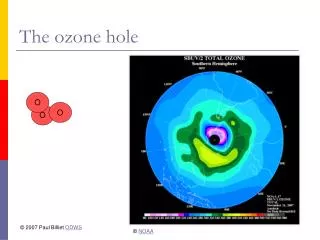
The ozone hole
O. O. O. © NOAA. The ozone hole. © 2007 Paul Billiet ODWS. Ultra Violet light. © 2007 Paul Billiet ODWS. UV light and life. UV light is high energy light When it strikes molecules it can cause them to beak into ions or free radicals

The ozone hole
E N D
Presentation Transcript
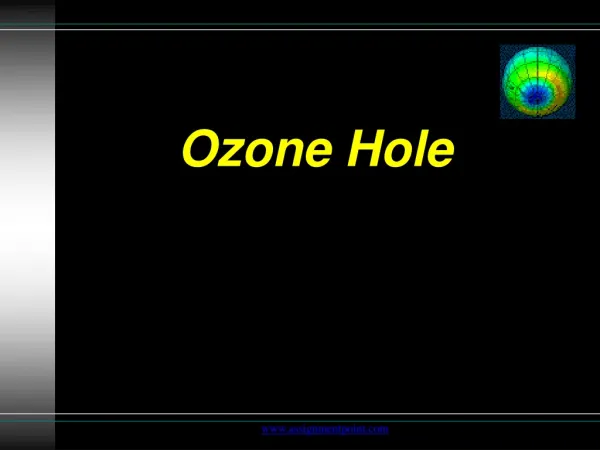
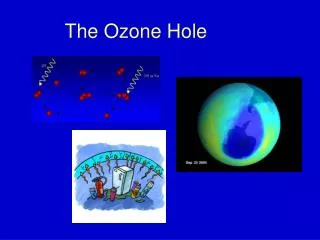
O O O © NOAA The ozone hole © 2007 Paul Billiet ODWS
Ultra Violet light © 2007 Paul Billiet ODWS
UV light and life • UV light is high energy light • When it strikes molecules it can cause them to beak into ions or free radicals • The free radicals in turn damage large molecules such as proteins and DNA • Damage to DNA causes mutations • It is a mutagen • Mutations can lead to cancer © 2007 Paul Billiet ODWS
UV light and life • UV light can have beneficial effects too • It stimulates the transformation dietary steroids into Vit D (calciferol) • UV light is used to sterilise foods and medical equipment • Some animals can see UV light • Insects use it to guide them to nectar sources in flowers © 2007 Paul Billiet ODWS
ACGCTGGCTTAGT TGCGACCGAATGA ACGCTGGCT=TAGT TGCGACCGAATGA UV light & DNA • UV-B has a direct effect on DNA • DNA absorbs UV light of 260nm • The action of UV forms thymine dimers • This can cause a gene mutation when the DNA replicates UV-B Thymine dimer DNA © 2007 Paul Billiet ODWS
Specific damage by UV light • Sunburn • Clouding of the cornea and formation of cataract • Skin cancer (melanoma) • Reduced rates of photosynthesis © 2007 Paul Billiet ODWS
Ozone in the atmosphere • Ozone (O3) forms under the effect of UV light in the stratosphere • Ozone can also form in the troposphere • Naturally it forms from volcanic activity • It is produced by motor vehicules so it is a pollutant • Sunlight acts on NOx to produce O3 © 2007 Paul Billiet ODWS
© Airparif Ozone pollution in the troposphere Safety limit
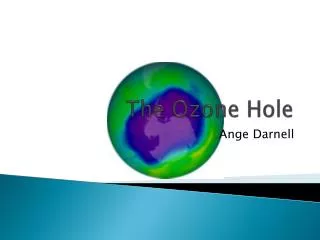
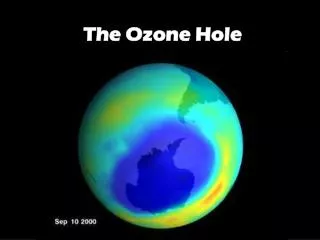
The ozone layer • Ozone is an unstable gas • It rapidly breaks down • The ozone layer is only a few cm thick • If the rate of breakdown is faster than the rate of formation the ozone layer thins • This could develop into hole • An ozone hole was first observed over the Antarctic in 1985 © 2007 Paul Billiet ODWS
The cause of the hole • Chlorofluorocarbons (CFCs) • The breakdown under the effect of UV light to release chlorine radicals (Cl) • Especially under cold conditions • The chlorine radicals react with O3 converting it to O2 and more radicals ClO © 2007 Paul Billiet ODWS
What are CFCs? • Used as propellants in aerosol spray cans • Used as refrigerants in fridges, freezers and air conditioning units © 2007 Paul Billiet ODWS
What can be done? • Reduce the use of CFCs • They are already banned in aerosols (1987) • BUT they are still used as refrigerants • Recycle fridges and air conditioning plants © 2007 Paul Billiet ODWS
The current situation • The holes developing over the pole suggest that they may be show an improvement • BUT CFC molecules take 30 years to rise up to the stratosphere • The chlorine radicals last a long time • The peak ozone damage was supposed to be in 2000 • Damage could go on another 50 years © 2007 Paul Billiet ODWS
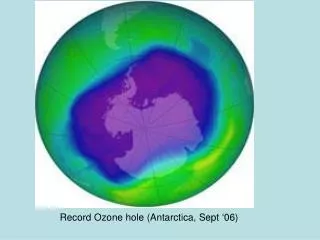
© NASA The biggest yet September 2006