Stem-Changing Verbs
Explore the fascinating world of stem-changing verbs in Spanish, which alter their vowels when conjugated. Learn the key examples, such as *preferir* (to prefer) and *almorzar* (to have lunch). Discover how yo-go verbs, like *salir* (to leave) and *tener* (to have), also change in the first person singular while following normal conjugation rules. This guide provides essential phrases and questions to practice these verb forms, helping you strengthen your Spanish skills and conversational abilities.


Stem-Changing Verbs
E N D
Presentation Transcript
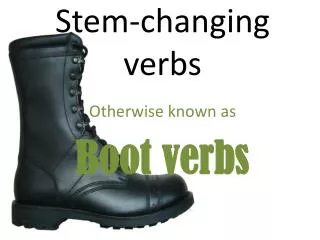
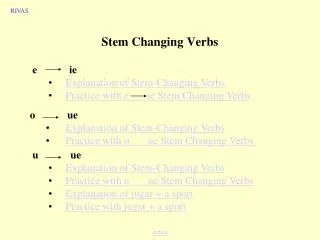
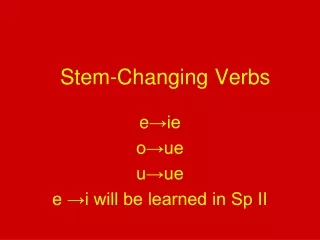
What are stem-changers? • Stem-changers are verbs that, when conjugated, change vowels in the middle: Preferir – to prefer (e -> ie) YoPrefieroNosotrosPreferimos TúPrefieres ÉlUstedes Ella PrefiereEllosPrefieren UstedEllas
Entonces, ¿Cómo se dice en español…? • They close at 9:30. • We sleep a lot. • When do you eat lunch? • She can play volleyball! • I want to sleep.
What are yo-GO verbs? • Yo-go verbs conjugate normally, but change their endings to “go” in the yo form: Salir – to leave YoSalGONosotrosSalimos Tú Sales ÉlUstedes Ella Sale EllosSalen UstedEllas
Some verbs are yo-go, AND stem-changing: Decir– to say (e => i) YoDiGONosotrosDecimos Tú Dices ÉlUstedes Ella Dice EllosDicen UstedEllas
Venir– to come/arrive (e => ie) YoVenGONosotrosVenimos TúVienes ÉlUstedes Ella VieneEllosVienen UstedEllas
Tener– to have YoTenGONosotrosTenemos TúTienes ÉlUstedes Ella TieneEllosTienen UstedEllas
Phrases with Tener: • Tenerque – • Tenerhambre – • Tenersed – • Tengoqueirme – • Tenerganas de – • Tener ____ años –
Entonces, ¿Cómo se dice en español…? • I’m coming home at 10:15. • I set the table everyday. • She doesn’t feel like doing homework. • My mother is 45 years old. • I have to clean my room.
Dar– to give YoDoyNosotrosDamos Tú Das ÉlUstedes Ella Da EllosDan UstedEllas
Ir– to go YoVoyNosotrosVamos TúVas ÉlUstedes Ella VaEllosVan UstedEllas
Entonces, ¡Contesten en español! • ¿Cuántosañostienes? • ¿Cuándoalmuerzas? • ¿Cuánto cuesta un refresco? • ¿Dóndeestás? • ¿De dóndeeres? • ¿Quiénestuprofesor de matemáticas? • ¿Cuálestuclasefavorito? • ¿Adónde vas este fin de semana? • ¿Quétegustahacer?