Comparative Analysis of Sintering Techniques on Material Properties and Viscosity
This study investigates the effects of different sintering techniques, including single-stage, hybrid two-stage, and conventional two-stage sintering, on material properties such as viscosity, pore volume, and grain size. Utilizing a range of temperatures and solid loading percentages, we present data visualizations through various figures, highlighting the relationship between process parameters and final material characteristics. The findings aim to enhance understanding of sintering behavior and optimize material performance in advanced manufacturing.

Comparative Analysis of Sintering Techniques on Material Properties and Viscosity
E N D
Presentation Transcript
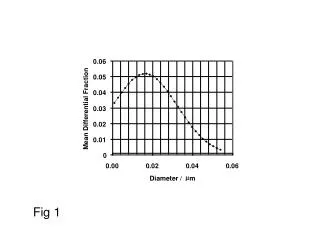
0.06 0.05 0.04 0.03 Mean Differential Fraction 0.02 0.01 0 0.00 0.02 0.04 0.06 m Diameter / m Fig 1
Single stage sintering Hybrid two stage sintering T1 T2 Conventional two stage sintering Temperature 7oC min-1 20oC min-1 Time Not to scale Fig 2
1.2 As-received 1.0 0.8 Dispex & multi-ultrasound 0.6 Viscosity / Pa s TAC & multi-ultrasound 0.4 0.2 0.0 5.0 10.0 15.0 20.0 25.0 30.0 35.0 Solids loading / vol% Fig 3
50% SC; Conv 0.4 50% SC; Humid 70% SC; Conv 70% SC; Humid 0.3 Pore volume / cm3 g-1 0.2 0.1 0.0 2 4 6 8 10 20 40 60 80 Pore Diameter / nm Fig 5
b 180 160 single stage sintering 140 120 two stage sintering 100 Avg grain size / nm 80 radiant heating 60 40 hybrid heating 20 c 0 60.0 65.0 70.0 75.0 80.0 85.0 90.0 95.0 100.0 Relative density / % a Fig 6
a b c Fig 7
Sample Fig 8