
100 likes | 220 Vues
In the early 17th century, a group of Protestant reformers known as Pilgrims sought religious freedom, separating from the Anglican Church. Their journey on the Mayflower led them to Plymouth in 1620, where they established the Mayflower Compact, laying the groundwork for representative government. They faced harsh winters and were aided by Native Americans like Squanto and Samoset, leading to the first Thanksgiving. Puritans followed, creating a society based on strict biblical principles in Boston and leading to conflicts with Native Americans, whose power dwindled in subsequent wars.
E N D
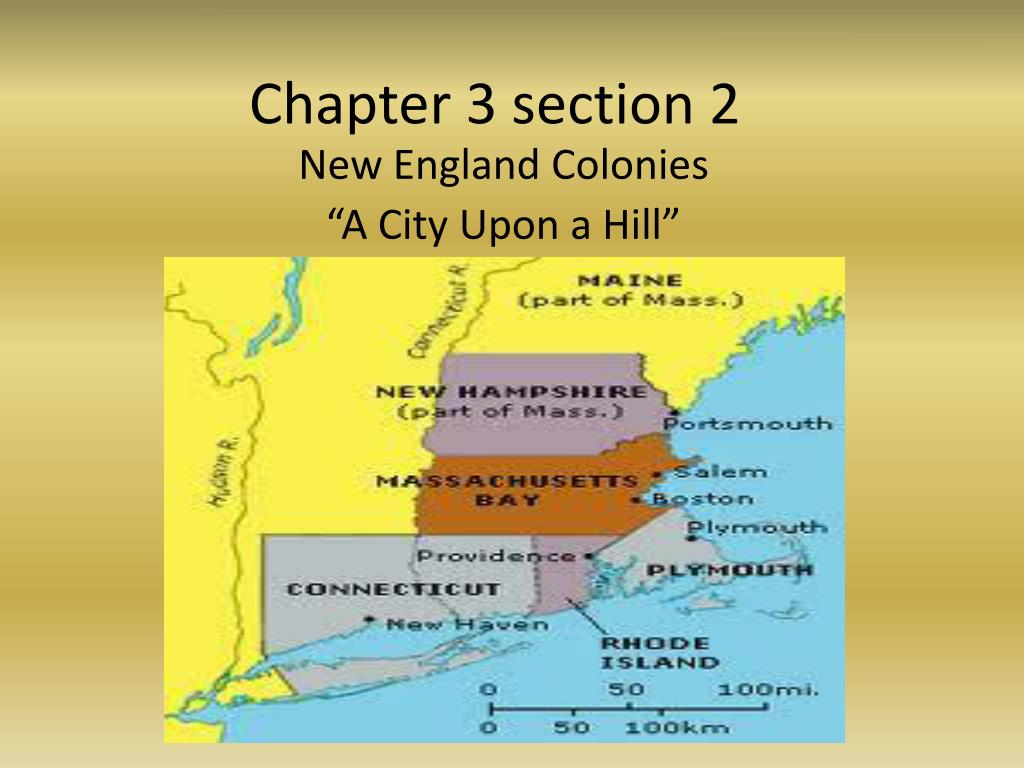
Chapter 3 section 2 New England Colonies “A City Upon a Hill”
Religious Freedom, 1620 • Protestant group of reformers • Wanted to leave, SEPARATE, from the Anglican Church • Pilgrims – journey for religious reasons • Would move to Virginia to practice religion freely. • Traveled on the Mayflower. • Only 35 of the 102 people were Pilgrims.
Mayflower Compact, 1620 • Landed at Plymouth, over 200 miles away from Virginia. • William Bradford, leader. • BEFORE getting off the boat, they wrote and signed a formal document – the Mayflower Compact. • Pledged loyalty to England • Majority rule • One of first documents in creating representative government in America
Help from Native Americans • First winter – almost half died from starvation. • Spring, 1621 – two Pawtuxet Indians, Squanto, and Samoset, came to help them. • Fall, 1621, the Pilgrims and the Pawtuxet meet and hold a feast to celebrate the peace between them. • Now called Thanksgiving.
Puritans • 1625 • King Charles I becomes King of England • Puritans wanted the Anglican Church to change • Charles I was opposed to any change and began to persecute the Puritans • The Puritans leave England and plan to create a settlement north of Plymouth
BOSTON • Puritans wanted to create a new society in America – one based upon the Bible. • It was located on higher ground in what is today Boston, Massachusetts • They wanted people to walk by and say, “look at that city upon the hill. If only we could be like them.” • Extremely harsh and strict in their laws and rules for living. • Adult male church members were allowed to vote. Later, would also require land ownership.
TROUBLEMAKERS • Anne Hutchinson : • Roger Williams:
TROUBLEMAKERS, continued • Thomas Hooker • Connecticut • Fundamental Orders of Connecticut • First written plan of government in the colonies • Main settlement, Hartford
TROUBLEMAKERS, cont. • John Wheelright • New Hampshire In 1638 a settlement was made at Exeter between the Piscataqua and Merrimac rivers by John Wheelwright, the brother-in-law of Mrs. Hutchinson, who had been banished from Massachusetts. The territory that would become New Hampshire was included in a grant of land in 1622 by the Council for New England to Sir Ferdinando Gorges and John Mason,
Conflict with Native Americans • Native Americans were essential to the survival of the early colonists • 1636, war broke out between the settlers and the Pequot people in Massachusetts • 1675, King Phillip, the Wampanoag chief in New England; also know as Metacomet. • Wanted to stop settlers from moving onto and taking the lands from the Native Americans. • Killed hundreds of people • War destroyed the power of the Native Americans in New England.