ENVIRONMENTS
This comprehensive resource explores various environments, from micro-habitats to biomes, focusing on how abiotic and biotic factors influence organisms. Understand ecological niches, the optimal range for species functioning, and how they respond to competition and resource distribution. Dive into plant tropisms, including positive and negative growth responses to environmental stimuli. Discover key terms related to plant adaptation and signaling, including phytohormones and dormancy. Worksheets and examples enhance the learning experience, making complex concepts accessible.


ENVIRONMENTS
E N D
Presentation Transcript
ENVIRONMENTS Read 199-207
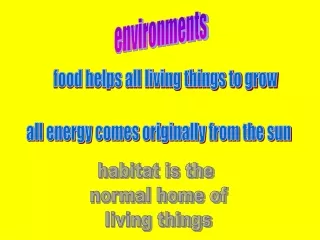
SIZES OF ENVIRONMENTS SMALLEST LARGEST ORGANISM MICRO-HABITAT HABITAT BIOME BIOGRAPHICAL REGION BIOSPHERE
ECOSYSTEMS BIOTIC – living ABIOTIC – (A)non-living Examples: Abiotic factors that influence tolerance (worksheet)
ECOLOGICAL NICHE An ecological niche describes how an organism or population responds to the distribution of resources and competitors . The way of life of a species. The optimum range refers to the abiotic factors at which the organisms functions best. Physiological stress refers to outside the preferred niche/optimum range. Looking at niches (worksheet)
PLANTS & TROPISMS Read 219-228
TROPISMS Tropism is the directional growth response of a plant to an environmental stimulus. Positive tropism – growing toward a stimulus Negative tropism – growing away from a stimulus Complete the table:
TROPISMS Tropisms (worksheet) Leaves can tell a story (worksheet)
Know the definitions of these: Epicormic bud Lignotubers Phytohormones Gibberellins Cytokinins Abscisic acid Ethylene Auxins Life of Plants (video) Phytochromes Photoperiodism Dormancy Taxis Nastic Nutation