Stress
This interactive study guide focuses on understanding and managing stress effectively. It outlines personal causes of stress, and offers essential strategies for avoiding and limiting stress. Key techniques include planning ahead, practicing refusal skills, and maintaining a positive mindset. The guide emphasizes the importance of healthy behaviors such as getting adequate rest, engaging in physical activity, and eating nutritious foods. It also discusses chronic stress and provides activities to help students explore stress-relief methods. This resource is designed to help you navigate stress and improve overall well-being.

Stress
E N D
Presentation Transcript
Stress Ch. 4 Lesson 2
Interactive Study Guide Open: iSwifter APP Open the bookmarks tab and choose: “Glencoe chapter activities” Drop Down: “Chapter Activities” Choose: “Chapter 4” Open: “Interactive Study Guides” Open: “Lesson #2” http://glencoe.com/sites/common_assets/health_fitness/glencoe_health_09/isg/GH_ch04.2.swf
Managing Stress Objective 1: List personal causes of stress. Objective 2: Identify ways to avoid and limit stress. Objective 3: Discover strategies for managing stress. Objective 4: Develop healthful behaviors that help reduce stress.
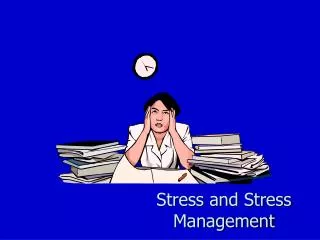
When Stress Becomes a Problem The affects of stress are additive, meaning they build up over time. Unless you find ways to manage stress, it will take a physical and mental toll on you. Chronic Stress: Stress associated with long-term problems that are beyond a person’s control.
Stress-Management Techniques • Use Refusal Skills: Determine whether you have time for a new activity before agreeing to take it on. • Plan Ahead: Manage your time wisely by planning ahead. • Think Positively: A positive outlook limits stress by shifting your perception and the way you react to a stressor. • Avoid Tobacco & Drugs: This will harm the body and end up causing more stress.
Handling Stress and Reducing its Effects • For Stressors that are unavoidable, try to find ways to reduce their negative effects. • Practice relaxation techniques: Deep breathing, pleasant thoughts, stretching, taking a warm bath, getting a massage, laughing, can help relieve stress. • Redirect your energy: Working on a creative project, working out, etc. • Getting support: Talking about your problem can make you feel better
Staying Healthy & Building Resiliency Developing habits that maintain your general health will also help reduce the effects of stress. Get Adequate Rest: Getting 8-9 hours of sleep each night can help you face the challenges and demands of the next day. Get Regular Physical Activity: Physical activity can release pent-up energy and clear your mind. It also helps you sleep better. Eat Nutritious Foods: This helps the body function properly and reduces the effects of stress. Poor eating habits can contribute to stress. Under-eating/overeating and caffeine can increase the effects of stress.
Partner Activity • One iPad per pair. Open the link to complete the activity. • It’s under Glencoe Ch.4 “Eye on the Media” • http://glencoe.mcgraw-hill.com/sites/dl/free/0078726549/359990/eom_ch08.pdf • If you are struggling fining an product, answer this question…. • Some people say that smoking relieves stress. Is this true? Research!!