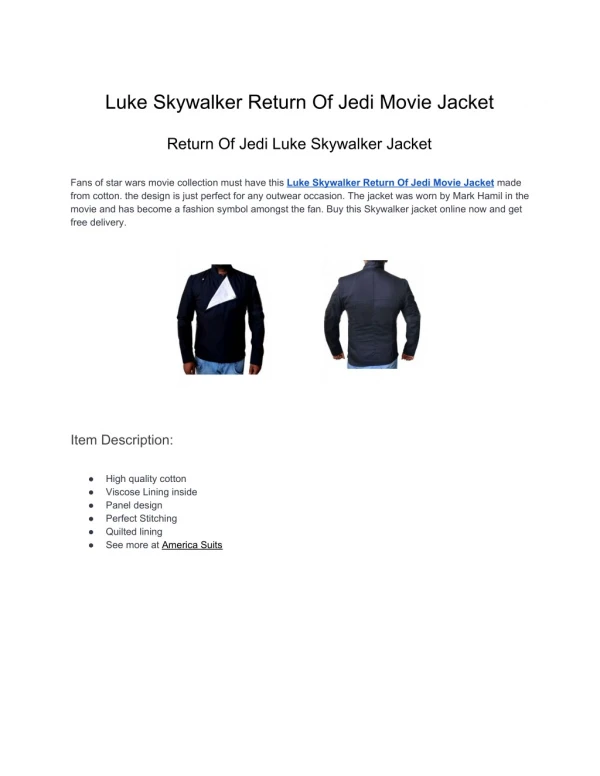
LUKE SKYWALKER
Discover the fascinating history of Beaujolais, from its beginnings in 1st century B.C. with Caesar's army to its distinct identity formed by the nobility in the 10th century. Learn about the unique Gamay grape variety, the meticulous vinification process, and how Beaujolais is produced by over 3,600 estates. Understand the sensory qualities that make Beaujolais special and how it is enjoyed globally. Delve into the wine-making techniques that define this beloved French region and explore vintage classifications from exceptional to acceptable.
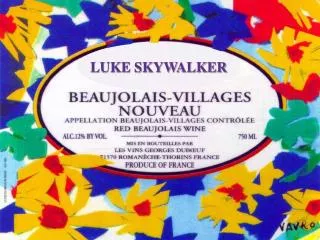

LUKE SKYWALKER
E N D
Presentation Transcript
Beaujolais is written with an "S" because there are 12 of them
History of Beaujolais • 1st century B.C. - Caesar's army planted the wine along the roads • 10th century - nobility created the town of Beaujeu in the western hills of Beaujolais • July 1395 - identity distinct from neighbor Burgundy, after Philippe the Bold outlawed the Gamay grape in Burgundy • Edict proved to be a good thing for each of the two regions
Beaujolais vinification • Typicity: the original element identifies a Beaujolais among other wines • Sensory quality: subjective for the taster • Nutritional quality: wine and health
Beaujolais vinification • Unique grape variety • Gamay noir à Jus Blanc, red Beaujolais • (99% of production) • Highest densities of plantation in the world • 10 000 vines/ha (7 000 to 13 000 vines/ha) • Many characteristics of the harvest • (soil, maturity, condition……)
Who makes Beaujolais? • 3 619 wine making estates produce the different Beaujolais appellations. • Many vine growers join forces within the 19 co-operatives
48% in France: Cafés, hotels and restaurants: 26% Hyper/supermarkets: 42% Other: 32% 52% abroad: Germany: 26% Switzerland:15% USA: 14% Japan: 10% Great Britain:9% Others: 26% Where are Beaujolais sold?
The vine growing Plantation: Grape variety for red wine - Gamay Pruning: From December to March 12 buds left on wine :
Making Beaujolais Manual Harvesting: -35.000 people, 20 days in mid-September -good for sorting grapes - mechanical harvest not satisfactory Keeping Wine Appellation: -length of maceration (4 to 10 days) -temperature - bunch/juice ratio
Making Beaujolais • Pressing and Fermentation: • -checks and analyses • -pressed juice (festival in Odenas/10) • run off juice and the press assembled • finished fermentation Analyzing, Filtering, Bottling:
Tasting • Temperature : Nouveaux wines 12-14°C - below that neither its bouquet nor its fruit - maximum for a Cru 18°C, the ideal 16°C • Sight : thin, tulip shape, clear glass - robe verging on purple - old wines slightly towards brown - swirl the wine and check "good legs" or tears (if they are thin or fleeting the wine is dry)
Tasting • Smell : swirling releases distinctive aromas (bunch is not crushed before fermentation ) • -secondary aromas mainly fruity: apricot, cherry, peach, strawberry, raspberry, pear and apple. • Taste : take a little sip but its too early to swallow as your mouth can discover more • - now you can decide if the wine is lively, fleshy, tender, long depending on the main elements : acidity - tannin - alcohol
Vintage code Classification based on general and objective observation. ***** EXCEPTIONAL (Vintage of the century) **** EXCELLENT *** GOOD ** QUITE GOOD * ACCEPTABLE
Vintage Beaujolais Nouveaux Beaujolais andBeaujolais Villages Beaujolais Crus 1982 *** * * 1983 ** **** **** 1984 ** * * 1985 * ***** ***** 1986 ** * * 1987 *** ** ** 1988 ** *** ** 1989 *** ***** **** 1990 **** **** **** 1991 *** ***** ***** 1992 *** ** ** 1993 ** *** **** 1994 *** *** *** 1995 *** **** **** 1996 *** *** ** 1997 ***** **** **** 1998 *** *** *** 1999 **** *** **** 2000 **** **** ****