
SlideServe
Menu
Préférences
© SlideServe · v2026

Simple Response Model

willow avatar
16 diapositives · 422 Views · Oct 03, 2014

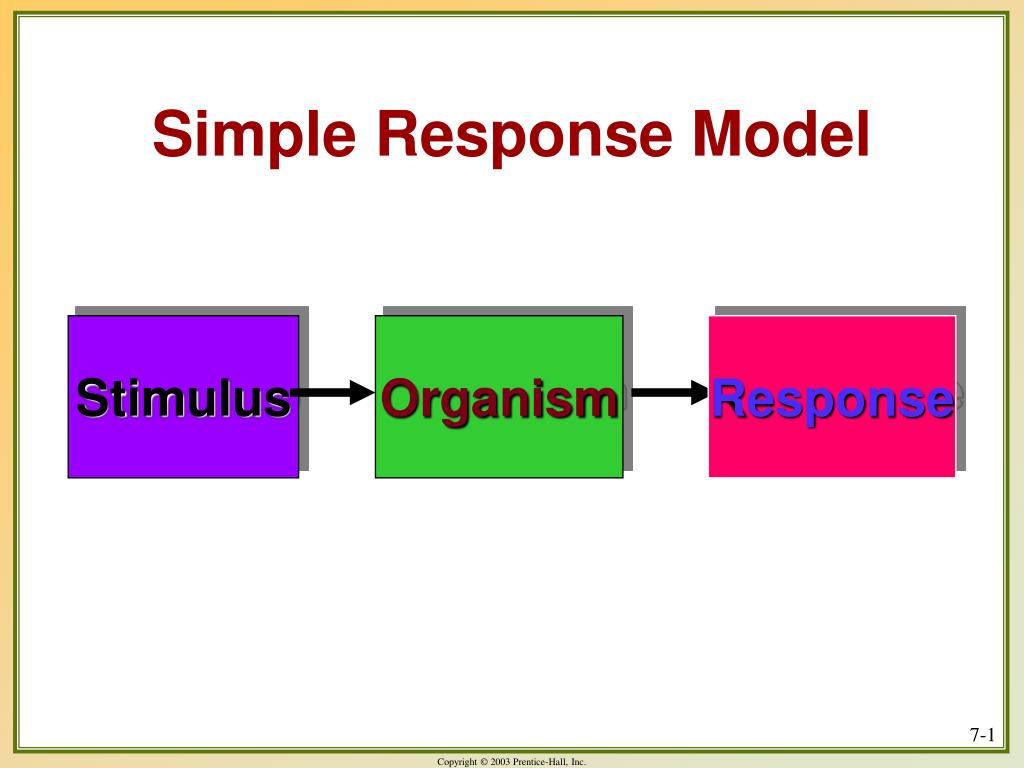
Organism. Response. Simple Response Model. Stimulus. Significant differences between brands. Few differences between brands. Four Types of Buying Behavior. Complex Buying Behavior. Variety- Seeking Behavior. High Involvement. Low Involvement. Dissonance- Reducing Buying
Simple Response Model - slide 1
01 / 16Simple Response Model
1 / 17

Télécharger la présentation

Simple Response Model
Une image / un lien ci-dessous est fourni (tel quel) pour télécharger la présentation

Politique de téléchargement : le contenu du site vous est fourni TEL QUEL pour votre information et votre usage personnel ; il ne peut être vendu, concédé sous licence ni partagé sur d’autres sites sans l’accord de son auteur.Le contenu vous est fourni TEL QUEL, pour votre information et votre usage personnel uniquement. Téléchargez la présentation en cliquant sur ce lien. Lors du téléchargement, si vous ne parvenez pas à télécharger une présentation, l’éditeur a peut-être supprimé le fichier de son serveur.Pendant le téléchargement, si vous ne parvenez pas à obtenir une présentation, le fichier a peut-être été supprimé par l’éditeur.

F I N

Plus de contenu associé

Transcription de la présentation
  1. Organism Response Simple Response Model Stimulus

  2. Significant differences between brands Few differences between brands Four Types of Buying Behavior Complex Buying Behavior Variety- Seeking Behavior High Involvement Low Involvement Dissonance- Reducing Buying Behavior Habitual Buying Behavior

  3. Influencing Buyer Behavior • Personality and Self-Concept • Personality • Brand personality • Sincerity • Excitement • Competence • Sophistication • Ruggedness • Self-concept • Person’s actual self-concept • Ideal self-concept • Others’ self-concept

  4. Influencing Buyer Behavior • Psychological Factors • Motivation • Motive • Freud’s Theory • Laddering • Projective techniques

  5. Influencing Buyer Behavior • Ernest Dichter’s research found: • Consumers resist prunes because prunes are wrinkled looking and remind people of old age. • Men smoke cigars as an adult version of thumb sucking. • Women prefer vegetable shortening to animal fats because the latter arouse a sense of guilt over killing animals. • Women don’t trust cake mixes unless they require adding an egg, because this helps them feel they are giving “birth.”

  6. Influencing Buyer Behavior • Maslow’s Theory Figure 7.3: Maslow’s Hierarchy of Needs

  7. Influencing Buyer Behavior • Perception • Selective attention • People are more likely to notice stimuli than relate to a current need • People are more likely to notice stimuli than they anticipate • People are more likely to notice stimuli whose deviations are large in relation to the normal size of the stimuli • Selective distortion • Selective retention

  8. Influencing Buyer Behavior • Learning • Drive • Cues • Discrimination • Beliefs and Attitudes • Belief • Spreading activation • Attitude

  9. The Buying Decision Process • Buying Roles • Initiator • Influencer • Decider • Buyer • User • Buying behavior

  10. Stages of the Buying Decision Process • Problem recognition • Information search • Personal sources • Commercial sources • Public sources • Experiential sources Figure 7.4: Five-Stage Model of the Consumer Buying Process

  11. Figure 7.5: Successive Sets Involved in Customer Decision Making

  12. The Buying Decision Process • Evaluation of Alternatives • Potential Attributes of interest • Cameras • Hotels • Mouthwash • Tires • Brand beliefs • Brand image

  13. Table 7.4: A Consumer’s Brand Beliefs about Computers

  14. The Buying Decision Process • Strategies designed to stimulate interest in a computer • Redesign the computer • Alter beliefs about the brand • Alter beliefs about competitors’ brands • Alter the importance weights • Call attention to neglected attributes • Shift the buyer’s ideas

  15. The Buying Decision Process • Purchase Decision Figure 7.6: Steps Between Evaluation of Alternatives and a purchase decision

  16. The Buying Decision Process • Postpurchase Behavior • Postpurchase Satisfaction • Disappointed • Satisfied • Delighted • Postpurchase Actions • Postpurchase Use and Disposal