Complete Streets: Enhancing Connectivity at the MDOT/ACEC Partnering Conference
120 likes | 259 Vues
The Complete Streets initiative aims to improve urban connectivity through comprehensive planning and stakeholder collaboration. This session includes practical strategies for implementing corridor improvements, evaluating feasibility, and identifying funding opportunities under programs like Act 51 and the Surface Transportation Program. Join us to learn innovative approaches, prioritize cost-effective solutions, and involve communities for sustainable transportation development. Engage with local partnerships to transform streets into accessible and inclusive environments for all users.


Complete Streets: Enhancing Connectivity at the MDOT/ACEC Partnering Conference
E N D
Presentation Transcript
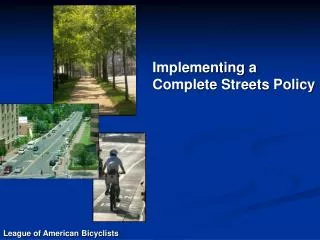
Complete Streets:Making Connections MDOT/ACEC Partnering Conference February 2, 2012
Implementation • Perform Research • Identify Stakeholder Groups • Obtain Input • Identify Potential Corridor Improvements • Evaluate Improvement Feasibility & Alternatives • Identify Funding Opportunities & Restrictions • Determine Project Scope
Think Outside the Box! • Look Beyond Political Boundaries • Use Creative Funding Sources • Seek & Incorporate Community & Stakeholder Input • Incorporate Practical Connectivity • Establish Priorities, based on Cost Effectiveness, Inclusion in Other Projects, etc.
Funding Possibilities • Act 51 • Surface Transportation Program (STP) • Transportation Economic Development Program • Michigan Natural Resources Trust Fund • CMAQ • Enhancement • Safe Routes to School • Federal Highway Administration • Federal Transit Administration • HUD/MSHDA
Funding Possibilities (Cont.) • Community Development Block Grant (CDBG) • Health Department • Foundations • Local Millage or Allocation • Local Partnerships • Current Infrastructure Projects • Design Standards & Policies • Tax Increment Financing • Federal Grants
Parallel Routes CEDAR STREET MDOT Trunkline 22,000 ADT 5 Lanes Wide
Parallel Routes Draft Non-Motorized Plan No Route Proposed Proposed Route Proposed Route
Low Budget Implementation EAST MT. HOPE AVENUE • Initiated by local business owner • Survey was sent to Impacted Parties • 8,000 ADT, 1.1 mile length • 45 mph speed limit • No existing non-motorized facility • Will connect to shoulder section in East Lansing, bike lanes on Aurelius Road & Lansing’s River Trail • Two of the area’s largest parks have new access to the non-motorized path
Low Budget Implementation 4 to 3 Lane Conversion, with 2 Adjoining Bike Lanes 4-to-3 Conversion is Considered when ADT is between 5,000 and 18,000 $5,500 Construction Cost East Mt. Hope Avenue
Incorporation with Other Work 8,000 to 12,000 ADT 35 mph speed limit AFTER BEFORE
Complete Streets:Making Connections Thank You! Maureen E. Turner, PE Maureen.Turner@AuburnDalle.com