Understanding Supply and Demand: Key Concepts and Market Dynamics
220 likes | 349 Vues
This chapter explores fundamental concepts of supply and demand in economics, essential for understanding market dynamics. It covers demand and supply schedules, equilibrium, and the implications of disequilibrium. Readers will learn about excess demand and excess supply, including how they affect consumer behavior and business strategies. Additionally, it discusses the role of price ceilings and floors, highlighting their effects on market efficiency and quality. This overview provides valuable insights for students and anyone interested in economic principles and their real-world applications.


Understanding Supply and Demand: Key Concepts and Market Dynamics
E N D
Presentation Transcript
Supply and Demand Chapter 18 Check 3 • Yeee haaa!!! I love notes!!!! • Write everything in yellow. That will pretty much be everything.
A Demand Schedule -How much consumers are willing to buy at various prices
A Supply Schedule -How much sellers are willing to sell at various prices
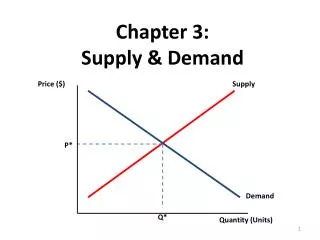
Equilibrium -Point of balance between price and quantity
buyers will find on shelves at equilibrium….. -There will be ample supply on shelves
firms/businesses will find at equilibrium…. -There will be enough buyers for their goods
Disequilibrium occurs when… -When quantity supplied is not equal to quantity demanded
Excess Demand is…. -Quantity demanded is more than the quantity supplied
What will happen to customers at excess demand? -They will have to wait in long lines or not get the product they want
What should a business do at excess demand? -Increase the price
Excess Supply -Quantity supplied exceeds the quantity demanded
The cause of excess supply.. -High prices or excess or over production
What will customers do at excess supply? -Buy less or buy an alternative
Price Ceiling -Maximum price set by law that sellers can charge for a good or service
An example of a price ceiling is... -Rent Control, can only charge so much
problems that price ceilings cause • -Reduces quantity and quality • -Waiting lists, discrimination, and bribery
Price Floors -Minimum price set by the government that must be paid
Example….. -Minimum Wage
if price floors are set wrong…… -Decrease in employment and benefits -Prices of products increase sharply
The government tried to work price floors into agriculture in past years… -Minimum price set, but if it goes below then the government creates demand by purchasing excess crops
Now, a better idea…. -Provides emergency financial aid to farmers