
Anaerobic Gram-Negative Bacilli: Genus Identification, Chemical Tests, and Diagnosis
E N D
Presentation Transcript
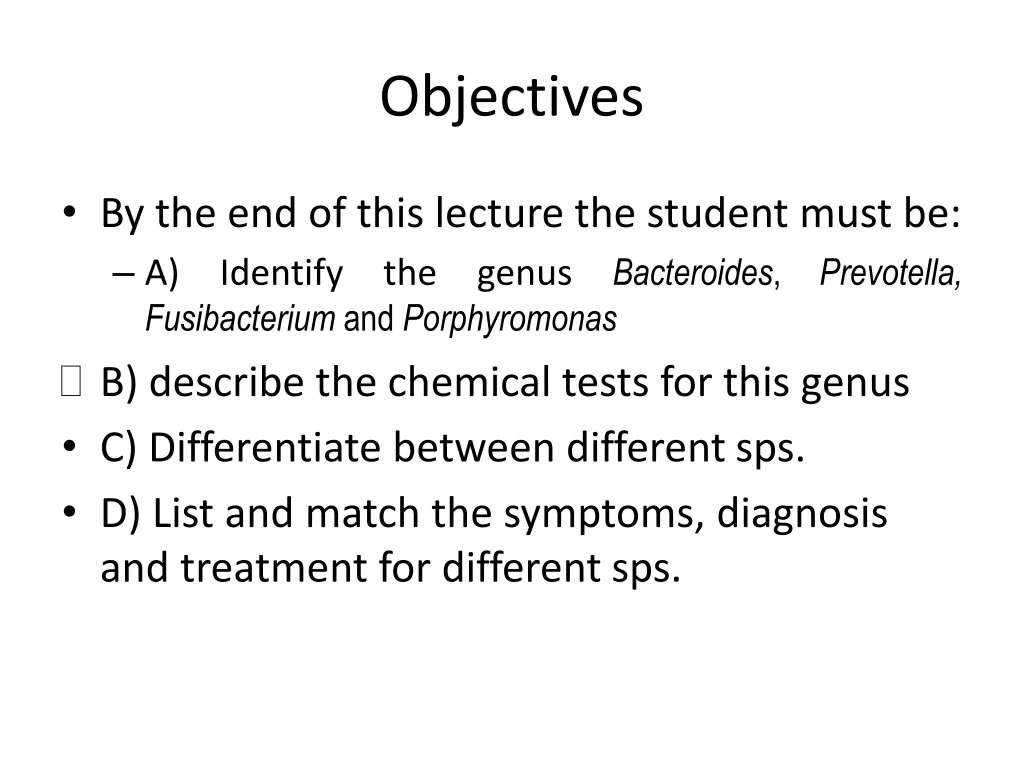
Objectives • By the end of this lecture the student must be: • A) Identify the genus Bacteroides, Prevotella, Fusibacterium and Porphyromonas • B) describe the chemical tests for this genus • C) Differentiate between different sps. • D) List and match the symptoms, diagnosis and treatment for different sps.
Anaerobic Gram negative bacilli • Gram negative rods, Anaerobic, Non-spore forming • Over 24 genera of Gram-negative anaerobic bacilli • The most important genera: • Bacteroides, Prevotella, Fusibacterium and Porphyromonas • B. fragilis, B. melaningenicus (now P. melaningenicus) and B. corrodensare the most important species • They predominant components of the florae of mucous membranes • B. fragilisgroup are the predominant in the colon (1011/g of feaces) • Anaerobes outnumber aerobes by 1000:1 in the large intestine • They play an important role in almost all intra-abdominal infections • 60% of female carry it in their vagina • P. melaningenicusand B. corrodensoccur primarily in oral cavity
Anaerobic Gram negative bacilli • Opportunistic pathogens • Cause serious infections • Infections are generally polymicrobial • Transmission • Endogenous spread to normally sterile tissues or fluids • Bacteroides infections can develop in all body sites, including the CNS, the head, the neck, the chest, the abdomen, the pelvis, the skin, and the soft tissues • Predisposing factors • Any condition predisposing to anaerobic infections such as diabetes • Surgical/Trauma patients and chronic diseases • Human and animal bites • Decreased redox potential: Local tissue necrosis, impair blood supply and growth of facultative anaerobes (E. coli) at the site contribute to anaerobic infection • E. coli utilize O2 therefore reduce it to level allow anaerobic to grow
Anaerobic Gram-Negative Infections • CNS Infections • Brain abscess and meningitis • Brain abscesses are commonly caused by adjacent chronic infections in ears, mastoids, sinuses, oropharynx, teeth or lungs • Head and neck Infections • Chronic otitis media; sinusitis; mastoiditis; tonsillar,peritonsillar, and retropharyngeal abscesses; cervical lymphadenitis • Dental infections, include periodontal disease, gingivitis, localized periodontitis, pericoronitis, endodontitis, periapical and dental abscesses and post-extraction infection • Pleuropulmonary Infections • 90% of patients with community-acquired aspiration pneumonia • B. fragilisis found in 25% of lung abscesses • Intra-abdominal Infections • Secondary peritonitis, Appendicitis and Abdominal abscesses
Anaerobic Gram-Negative Infections • Gynecoloical Infections • Bacterial vaginosis; soft tissue perineal, tubo-ovarian, pelvic and vulvar abscesses; endometritis; salpingitis; pelvic cellulitis; intrauterine device–associated infection; septic abortion and postsurgical obstetric and gynecologic infections • Skin and Soft Tissues Infections • Infected cutaneous ulcers, secondary diaper rash • Cutaneous and subcutaneous abscesses, breast abscesses • Necrotizing fasciitis, necrotizing synergistic cellulitis, gas gangrene • Osteomyelitis and septic arthritis • Bacteremia (5-15%)
Bacteroides Virulence Factors • Polysaccharide capsule • Antiphagocytic and adhesive • Lipopolysaccharide • Stimulates leucocytes migration and chemotaxis • Agglutinins • Enhance adherence • Histolytic enzymes • Tissues destruction, inactivates Immunogloublins • Oxygen tolerance • Catalase and superoxide dismutase • Beta-lactamases • Inactivates penicillins
Diagnosis • Direct-needle aspiration is the best method of obtaining a culture • Specimens obtained from normally sterile sites, such as blood or spinal, joint, or peritoneal fluids • Bacteroides can be isolated anaerobically on blood agar containing kanamycin and vancomycin to inhibit unwanted bacteria and incubated anaerobiacally • Treatment • Directed at all major aerobic and anaerobic pathogens • Clindamycin, cefoxitin and cefotetan • Almost sensitive to metronidazole, carbapenems, chloramphenicol and combinations of penicillin/β-lactamase inhibitors
Prevention and Control • Avoiding conditions that reduce the redox potential of the tissues • Preventing the introduction of anaerobes of the normal flora to wounds, closed cavities, or other sites prone to infection • Surgical intervention, abscesses drainage and antibiotic treatment • Prophylactic therapy are used when medical procedure disrupt the mucosa or if disruption of mucosa causing trauma • No vaccines are available