Enhancing Turbulence Avoidance: Current Solutions and Future Steps
This document explores the essentials of turbulence avoidance in aviation, detailing its importance for safety, efficiency, and customer experience. It traces the development of the Eddy Dissipation Rate (EDR) from its inception by NCAR in 1991 to its adoption by major airlines like Delta. The text discusses the roles of various users—meteorologists, dispatchers, and flight crews—and highlights challenges in providing tactical information. It proposes future steps to enhance turbulence reporting accuracy, broaden data access, and facilitate international collaboration in safety standards.

Enhancing Turbulence Avoidance: Current Solutions and Future Steps
E N D
Presentation Transcript
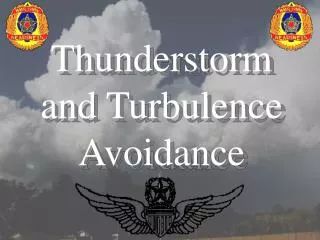
Turbulence Avoidance What now?
Turbulence Basics • Drivers – Safety, Efficiency/Emissions, Capacity, & Customer Experience • Primary users- Meteorologists, Dispatchers, Crews, & Controllers • How does it work today? • Solution Components • Forecast • Tactical/Now cast • Reporting
History • 1991 - NCAR began development of EDR • 1999 - UAL installed EDR with major airlines to follow • 2005 - NASA rms-g algorithm tested on 80 DAL B737 • 2007 – Delta installs EDR on B737 • 2008 – Delta – Ops Control feasibility test of EDR • Information well received by dispatchers • Limitations – Hard to provide tactical info to 15-20 flights • 2013 – Delta - GTG/EDR in the cockpit using WIFI • Very positive results • Now what
Next Steps • How to correlate different reporting metrics? • How to increase the report pool? • Who hosts the turbulence reports data? • Who has access to the data? • How to harmonize international community? • How to move forward with different viewers? • How to maintain the system as SA tool?
Positive Outcomes • FAA solution for EDR standards • FAA solution for standardized installation • A4A solution for data • Government • Commercial • FAA international work & airline partnering • New tools compared to PIREPS