Exploring Latin America's Diverse Geography and Rich Resources
50 likes | 184 Vues
Latin America stretches across 7,000 miles from Mexico to Tierra del Fuego, showcasing a variety of geographical features from the Andes Mountains, known as the Rockies in the US, to the Guiana Highlands and vast grasslands of the Llanos in Colombia and Venezuela. It is home to significant rivers like the Amazon and Orinoco. The region includes the Bahamas, Greater Antilles, and Lesser Antilles. With abundant natural resources, including gold, silver, and oil reserves in Venezuela and Mexico, as well as Brazil’s hydroelectric power, Latin America is a treasure trove of natural wealth.


Exploring Latin America's Diverse Geography and Rich Resources
E N D
Presentation Transcript
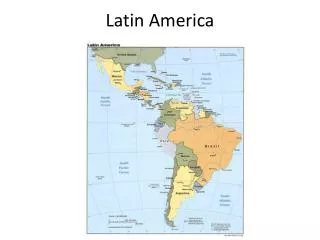
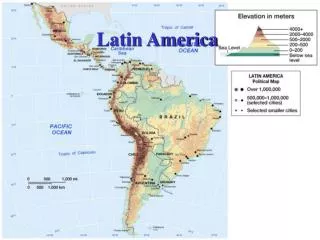
Latin America • Runs 7,000 miles from Mexico to Tierra de Fuego, southern most tip. • Andes Mountains-Known as the Rockies in the US and Sierra Madre in Mexico. Home of the Incas. • Guiana Highlands in northeastern South America and the Brazilian Highlands. • Llanos(vast grasslands in Colombia and Venezuela) • Cerrado( undeveloped savannas in the plains of the Amazon River Basin) • Pampas(plains in Argentina and Uraquay)
Rivers • Orinoco River-in the north, mostly in Venezuela. • Amazon River-flows almost 4,000 miles and carries more water to ocean than any other river. • Parana River-flows through Paraguay and Argentina where it turns into the estuary(wide lower course of a river where current meets tide) called the Rio de la Plata.
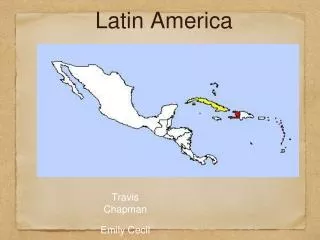
Islands • Bahamas-hundreds of islands south of Florida and north of Cuba. Nassau is the capitol and largest city. • Greater Antilles-Cuba, Jamaica, Puerto Rico and Hispaniola(divided between Haiti and the Dominican Republic. • Lesser Antilles-smaller islands southeast of Puerto Rico. Windward islands face north and Leeward islands are sheltered from the northeasterly winds.
Resources • Gold, silver, iron, copper, tin, lead, nickel, precious gems, titanium, tungsten and bauxite(aluminum ore) Jamaica began mining and processing bauxite to move from agricultural and tourism • Venezuela and Mexico have major oil reserves. Brazil hydroelectric power. Trinidad natural gas major exporter of ammonia and methanol.