Punctuation
Punctuation marks are essential elements of writing that help convey clear meaning and structure. This guide covers the primary punctuation marks used at the end of sentences, including periods, question marks, and exclamation points. It explains when to use each mark, including in statements, questions, exclamations, and commands. Additionally, the guide addresses proper punctuation in abbreviations for personal names, titles, organizations, addresses, geographical names, and time. Mastering these rules enhances clarity and professionalism in writing.

Punctuation
E N D
Presentation Transcript
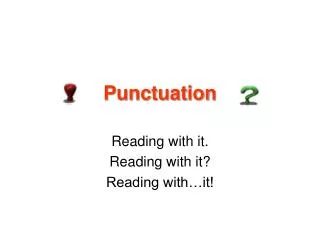
End Marks – punctuation marks at the end of a sentence. • Use a period at the end of a statement. • Use a question mark at the end of a question. • Use an exclamation point at the end of an exclamation. • Use either a period or an exclamation point at the end of a request or command.
Use a period after certain abbreviations. • Personal names – I.M. Good, F. Scott Fitzgerald, John D. Rockefeller • Titles with Names – Mr., Mrs., Jr., Dr. • Organizations – Assn., Co., Corp., Inc. • Addresses – Ave., Blvd., Ct., P.O. Box, Rd., St.
Geographical Names – Ark., St. Paul., Washington, D.C., U.S. • Times – A.M., B.C., P.M., A.D., Aug., Sat.