Latin America
120 likes | 243 Vues
This overview explores the varied agricultural practices in Latin America, highlighting subsistence farming, plantation agriculture, and livestock ranching. It discusses the impact of cash crops like coffee, tea, sugar, and cacao on the economy, as well as the challenges of deforestation and environmental degradation due to slash-and-burn techniques. Additionally, it touches on the role of haciendas, the influence of trade agreements like NAFTA, and the region's mineral wealth, including oil and copper. Insights into cultural aspects, such as the gauchos of Argentina, are also included.


Latin America
E N D
Presentation Transcript
Latin America Economic Geography
Agriculture • Subsistence Farming – small family owned farms with low production • Plantation Agriculture - Large farms that grow cash crops • People build terraced fields in mountainous areas • Cash Crops • Tea • Coffee • Sugar • Cocao
Terraced Fields People build terraced fields in mountainous areas such as the Andes.
Deforestation • People practice slash and burn farming in Latin America • They cut down trees and burn them to fertilize the soil • Rainforests are being destroyed for timber, ranching, and farming
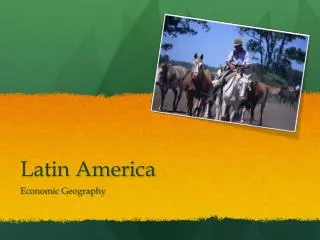
Ranching • Latin America has many cattle ranches • Cowboys in Argentina are called Gauchos • Gauchos work on the Pampas
Haciendas • Haciendas were large land holdings in Latin America • Some haciendas could be farms, ranches, or mines • Haciendas were owned by wealthy landowners and poor people worked the land
Minerals • Ecuador, Venezuela, and Mexico have oil • Ecuador and Venezuela are members of OPEC • Chile has large deposits of copper • Venezuela and Brazil have iron ore
NAFTA • NAFTA – North American Free Trade Agreement • Members are United States, Canada, and Mexico • NAFTA isa tradeagreement that abolishes tariffs between the three countries
Pollution Mexico City has severe air pollution