Plant Cells
Discover the fascinating world of chloroplasts and the process of photosynthesis, where light energy transforms carbon compounds in plant cells. Chloroplasts, found in eukaryotic cells, play a crucial role in building organic molecules by reducing oxygen atoms, unlike mitochondria, which oxidize compounds during respiration. Explore the special characteristics of plant cells, including large central vacuoles that store water and minerals and the cellulose-based cell wall that provides structure. Gain insights into the vital processes that sustain plant life.

Plant Cells
E N D
Presentation Transcript
Plant Cells Do Now:
The opposite of what happens in a mitochondria:Photosynthesis
Where does it all happen?The Chloroplasts! (In eukaryotes, anyway) Don’t Forget The video
Free-living chloroplasts?Not quite… Cyanobacterium (prokaryote) Chloroplast (from eukaryotic plant cell)
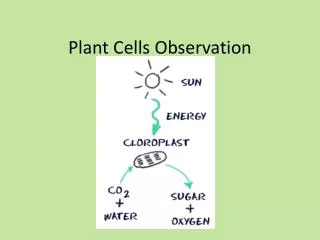
The Big Picture • Chloroplasts build organic molecules by REDUCING the number of oxygen atoms bonded to carbon, using light energy. • Mitochondria add oxygen to carbon when they break it down, by OXIDIZING it. This is called aerobic respiration
Reduced Compounds = FOOD • Reduced compounds contain a lot of energy, and fewer C-O bonds. example: (octane / gasoline) CH3CH2CH2CH2CH2CH2CH2CH3 example: (glucose) C6H12O6 Oxidizedcompounds contain less energy, and more C-O bonds. example: (carbon dioxide) CO2
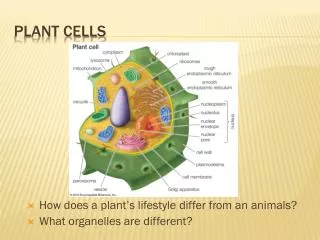
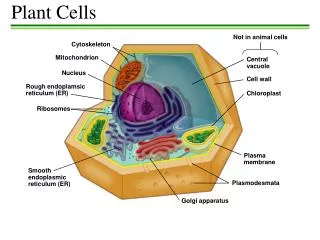
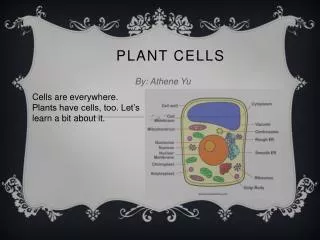
What else is so special about plant cells? Large, Central Vacuoles can take up most of The cell! It stores water, And some minerals