American Indian Policy
120 likes | 268 Vues
This overview explores the complex history of American Indian sovereignty in relation to U.S. policies from 1770 to the present. It highlights key milestones such as the signing of treaties, the Trail of Tears, and the evolution of self-governance initiatives. The timeline traces the shift from forced removal to self-determination, examining critical legislation and important cases impacting Native American rights. The narrative illustrates the ongoing struggles and triumphs of Indigenous nations in asserting their sovereignty and cultural identity amidst historical and contemporary challenges.


American Indian Policy
E N D
Presentation Transcript
American Indian Policy The History of Sovereign Nations in dealings with the United States
Sovereignty • Sovereignty is: • The ability of a group to act as an independent nation • Make own laws • Conduct own business without approval
Policy in Stages (1770-Today) • 1770: Sovereign Nation to Sovereign Nation • Treaties were signed • 1830: Removal • 1850: Reservations • 1870: Assimilation • 1930: Indian self-rule • 1950: Termination • 1960: Self-determination • 1988: Self-determination/self-governance
1770- 1820: Sovereignty • Promotion of civilization • Open trade • Territorial boundaries established • Treaties • Johnson v. McIntosh (1823) • Doctrine of “Discovery”
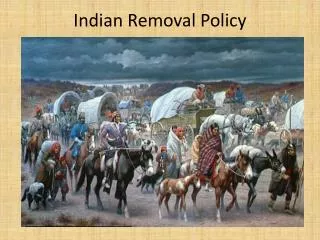
1830-1850: Removal • Broken treaties • Removal was voluntary but coerced • Cherokee “Trail of Tears” • Federalism under attack • Who had jurisdiction? Federal gov or State gov? • Cherokee Nation v. Georgia • Worcester v. Georgia • “Domestic Dependent Nations”
1850-1890: Reservation Discovery of Gold/Continued Expansion • Homestead Act 1862 • Reservations • Allotment • Allotment Act (Dawes Act) 1887 • Indian Agents • Restrictions • Constraints on hunting, ceremonial dances
1870-1930: Assimilation • Boarding Schools • Christian names • English • Trade Schools • Meriam Report • Churches/Missions Native American Enlistment in WWI US Citizenship 1924
1930-1950: Indian Self-Rule • Indian Reorganization Act (IRA) 1934 • Attempt to preserve, protect and support tribal art, culture and social organizations and traditions • Main goal was to stop the loss of tribal land • 25% of Native American men enlist in WWII-highest percentage of any group
1950-1960: Termination • 1945-1960 the Federal Government terminated 109 tribes. • The belief was that tribes were acculturated and no longer needed the government as their ‘trustee’ • 1.3 million acres of land and impacted 11,000 + people • Terminated benefits and support services for tribes • Now under state law • Mass movement from tribal family groups to urban centers to seek employment
1960-1988: Self-determination • Fishing rights • AIM • Occupation of Alcatraz (1969) • Trail of Broken Treaties (1973) • Occupation of Wounded Knee (1973) • Marches, boycotts, demonstration • Indian Civil Rights Act (1968)
1988-today: Self-determination & self-governance • 1988 Indian Gaming Regulatory Act • 1990 Native American Graves Protection and Repatriation Act • Obama: Tribal Leaders’ Summit • 2009 and 2011