Video Conferencing Statistics
What makes video conferencing so valuable is its flexibility and accessibility. Teams can collaborate across locations, learners can attend virtual classes, and healthcare providers can consult patients remotely. As platforms improve with better security and smarter features, video conferencing continues to evolve into a long-term solution rather than a temporary fix.<br><br>ud83dudc49 Explore detailed insights, trends, and data here:<br>ud83dudd17 https://market.biz/video-conferencing-statistics/<br>

Video Conferencing Statistics
E N D
Presentation Transcript
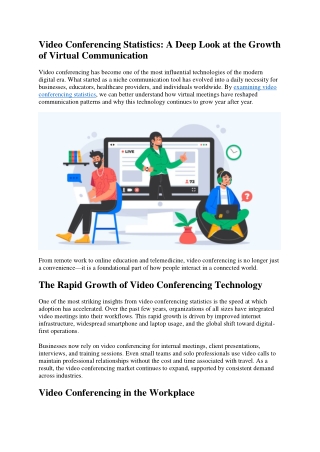
Video Conferencing Statistics: A Deep Look at the Growth of Virtual Communication Video conferencing has become one of the most influential technologies of the modern digital era. What started as a niche communication tool has evolved into a daily necessity for businesses, educators, healthcare providers, and individuals worldwide. By examining video conferencing statistics, we can better understand how virtual meetings have reshaped communication patterns and why this technology continues to grow year after year. From remote work to online education and telemedicine, video conferencing is no longer just a convenience—it is a foundational part of how people interact in a connected world. The Rapid Growth of Video Conferencing Technology One of the most striking insights from video conferencing statistics is the speed at which adoption has accelerated. Over the past few years, organizations of all sizes have integrated video meetings into their workflows. This rapid growth is driven by improved internet infrastructure, widespread smartphone and laptop usage, and the global shift toward digital- first operations. Businesses now rely on video conferencing for internal meetings, client presentations, interviews, and training sessions. Even small teams and solo professionals use video calls to maintain professional relationships without the cost and time associated with travel. As a result, the video conferencing market continues to expand, supported by consistent demand across industries. Video Conferencing in the Workplace
Workplace communication has undergone a major transformation, and video conferencing statistics clearly reflect this shift. Remote and hybrid work models have changed how teams collaborate, replacing many in-person meetings with virtual ones. Employees now attend video calls for daily stand-ups, project reviews, brainstorming sessions, and even casual check-ins. For employers, this has created opportunities to hire talent globally while maintaining effective communication. Video conferencing tools help teams stay aligned despite geographic distance, making distributed workforces more practical than ever before. At the same time, organizations are becoming more mindful of meeting fatigue. As usage increases, companies are focusing on smarter scheduling, shorter meetings, and better collaboration practices to keep employees engaged and productive. The Role of Video Conferencing in Education Education is another sector where video conferencing statistics reveal significant change. Virtual classrooms have opened new doors for students and educators alike. Schools, universities, and training institutes use video conferencing platforms to deliver live lectures, conduct discussions, and provide interactive learning experiences. Online education has made learning more accessible for students who may not have the ability to attend physical classrooms. Recorded sessions, screen sharing, and real-time interaction allow learners to engage with content in flexible ways. While traditional classroom learning remains important, video conferencing has become a powerful supplement, especially for remote learning and professional development. Video Conferencing and Healthcare Advancements Healthcare has also seen a notable rise in video conferencing usage. Telemedicine has become an essential service, allowing patients to consult with doctors from the comfort of their homes. Video conferencing statistics show that virtual appointments help reduce waiting times and improve access to care, particularly for people in rural or underserved areas. Mental health services, follow-up consultations, and routine check-ins are increasingly conducted through video calls. While in-person visits are still necessary for many medical needs, video conferencing has added convenience and efficiency to healthcare delivery, benefiting both patients and providers. Social and Personal Use of Video Conferencing Beyond professional and institutional use, video conferencing has become a key part of personal communication. Families and friends rely on video calls to stay connected across long distances. Virtual celebrations, online communities, and social gatherings have become more common, especially when physical meetings are not possible.
These personal interactions play an important role in sustaining emotional connections. Video conferencing statistics often focus on business metrics, but personal usage highlights the human side of this technology—bringing people together despite physical separation. Security, Features, and User Experience Trends As video conferencing usage grows, so does the focus on security and user experience. Users expect secure connections, data privacy, and reliable performance. Platforms are responding by introducing stronger encryption, better access controls, and features that enhance meeting quality. Artificial intelligence is also shaping the future of video conferencing. Features like noise reduction, live captions, meeting summaries, and virtual backgrounds improve usability and inclusivity. These advancements aim to make video meetings more efficient and less exhausting, addressing common challenges associated with long virtual sessions. What Video Conferencing Statistics Tell Us About the Future Looking ahead, video conferencing statistics suggest steady and sustained growth. Hybrid work environments are likely to remain common, online education will continue expanding, and telemedicine will play an increasingly important role in healthcare systems. Rather than replacing face-to-face interaction entirely, video conferencing is becoming a complementary tool that offers flexibility and efficiency. Organizations and individuals who understand these trends can adapt more effectively to the evolving digital landscape. Conclusion Video conferencing has transformed how people communicate, collaborate, and connect. The insights drawn from video conferencing statistics show a technology that is no longer optional but essential across multiple areas of life. As platforms continue to improve and user expectations evolve, video conferencing will remain a central part of global communication. Understanding these trends helps businesses, educators, and individuals make informed decisions and stay prepared for a future where virtual interaction plays a vital role.