Understanding Protein Functions: From Structure to Binding Dynamics
50 likes | 155 Vues
This text explores the critical transition from protein structure to function, detailing how proteins interact with various factors. It discusses the roles of different protein classes in transport, storage, immune response, and enzymatic activity. Key aspects include the influence of surface properties, shape, and electrostatic characteristics on binding. The text also covers the regulation of binding events through allosteric control, reversible covalent modifications, and proteolytic activation. These concepts are central to understanding cellular functions and the nuances of calcium signal transduction.


Understanding Protein Functions: From Structure to Binding Dynamics
E N D
Presentation Transcript
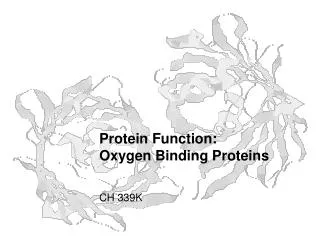
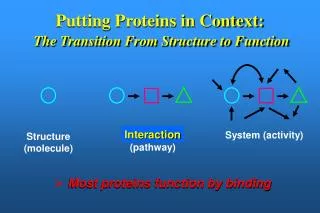
Putting Proteins in Context: The Transition From Structure to Function Interaction • Most proteins function by binding
Factors Bound by Different Protein Classes • Transport- O2/CO2, cholesterol, metals, sugars • Storage- metals, amino acids, • Immune response- foreign matter (antigens) • Receptors- regulatory proteins, transmitters • Structure- other structural proteins • Enzymes- substrates, inhibitors, co-factors • Toxins- receptors • Cell functions- proteins, metals, ions
Surface Properties Determine What Binds • Steric access • Shape • Hydrophobic accessible surface • Electrostatic surface Sequence and structure optimized to generate consequent surface properties for requisite binding event(s)
Binding: Progression and Regulation • Allosteric Control- binding at one site effects changes in conformation or chemistry at a point distant in space • Stimulation/inhibition by control factors- proteins, ions, metals control progression of a biochemical process (e.g. controlling access to active site) • Reversible covalent modification- chemical bonding, e.g. phosphorylation (kinase/phosphatase) • Proteolytic activation/inactivation- irreversible, involves cleavage of one or more peptide bonds
Ca2+ Target Calcium Signal Transduction