Density
This instructional guide explores the concepts of density and mass, detailing the measurement of the mass of an object, specifically 12.0 kg, and the volume of irregular solids using a displacement can technique. It explains how to determine volume through the displacement of water and provides clear steps for conducting experiments involving liquids and solids. The document outlines necessary apparatus, methods, results presentation, and a summary for students to follow, fostering a hands-on understanding of these fundamental scientific principles.

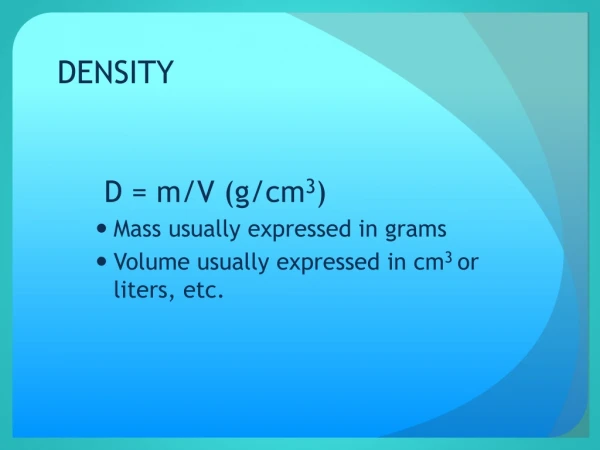
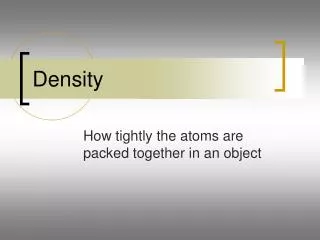
Density
E N D
Presentation Transcript
Mass • Amount of Matter in an object • Measured in Kg
Find Mass 12.0 kg 0.0kg
1.Fill the overflow can with water to a point above the spout. Wait until the water stops dripping from the spout. To Measure the volume of an irregular solid 3. Gently lower the stone into the overflow can. 4.Note the volume of the displaced water in the measuring cylinder, this is the volume of the stone. 2.Now place a dry measuring cylinder underneath the spout.
Find Mass 6.06428 g 0.0g
Expt. Write up • Date and Title • Aim – Explanation of title • Apparatus – Full names • Group- Who you did it with • Diagram with all parts labelled • Method – Numbered and in clear stages. ‘We first… • Results – Table or observations
Density of liquid 40 g
Measure volume of regular objects using a ruler and Volume = wxbxh • Measure volume of irregular object with displacement can • Use a measuring cylinder for liquids 3
Homework • P273 • Q1-7