Download
1 / 18
180 likes | 300 Vues
Discover the fascinating world of Ancient Egypt, where life was intricately woven with the divine. This exploration delves into the daily lives of Egyptians, from the humble workers' villages to majestic wealthy homes. Learn about their beliefs in gods and goddesses and the significance of the Nile River. Understand the importance of social classes, from pharaohs to farmers, and uncover the artistic brilliance reflected in architecture, sculpture, and hieroglyphics. Immerse yourself in the rituals of mummification and the symbolic meaning behind Egyptian artifacts.

E N D
Ancient Egypt Life, Myth, & Art by Angie Hendrikson
Gods & Goddesses • Everything governed by gods • Made offerings to gods and spirits • Symbolic animal features • Spectacular headdresses
The Nile River • River of life • Flooded annually • Fertile Soil • 6 miles of good farm land • Graveyards in desert
Egyptian Homes: Workers’ Villages • Cramped villages • Narrow streets • Made of bricks • Square in shape • Space divided • Front for fur trade/livestock • Back for living The layout of the Egyptian homes in the Tomb-builder’s town of Armana
Egyptian Homes: Wealthy Villages • Spacious and comfortable • Made of stone • High ceilings • pillars • barred windows • tiled floors • painted walls • Pools and gardens • Servant’s quarters • Countryside or outskirts of town Well-planned town of Deir el-Medina
Social Classes Pharaoh The Social Pyramid Vizier High Priests, Nobles Priests, Engineers,Doctors Scribes Craftsmen Soldiers, Farmers, Tomb Builders
Art of Ancient Egypt • Architecture • Sculpture • Masks • Jewelry • Cartouche • Hieroglyphics • Papyrus Paintings WWW
Architecture • Three main types • Pyramid • Pylon • Obelisk WWW
Sculpture • Busts • Statues • Sphinx
Relief Sculpture • Mural decorations in tombs • Wall marked out with red guidelines • Grid used for major human figures • Preliminary outlines corrected, paint applied in tempera • Carved painted areas out • Finished carving often painted
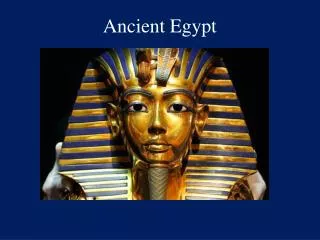
Masks • Funerary Masks • Used to cover the face of a mummy • Emphasized transition of dead from this world to the next • Preserved body after death • Ritual Ceremonies • Masks of animal heads • Magic Mask of Tutankhamun
Jewelry • Image-conscious people • Worn to embellish • Adorned with as much as could afford • Charms and amulets • Bracelets, rings, and anklets • Earring, bands around heads • Gold, precious stones • Adorned for afterlife
The Scarab • Design often used in jewelry • Represented Khepri (the sun at dawn) • Believed they were self-generating
Cartouche • Oval band • Name of King • Acts as protector of kings name This cartouche spells Cleopatra
Hieroglyphics • Egyptian writing • Letters and symbols/signs • Syllables • Writing considered sacred act Represents: Vulture Pronounced: ah (as in father) Represents: Two reeds Pronounced: y (as in discovery)
Papyrus Paper Paintings • Paper transformed society • Technology • Egyptians had monopoly on • Made from a plant
Mummification • When they die their soul leaves body • Soul would reunite with body after buried • Soul needed to recognize and find body in order to live forever Mummy Game http://www.bbc.co.uk/history/ancient/Egyptians/mummy_maker_game.shtml
Embalming • Preserved bodies to keep looking lifelike • Liver, lungs, stomach, and intestines kept in Canopic Parts • Natron: Salt mixture used to dry • Rebirth • Tools WWW