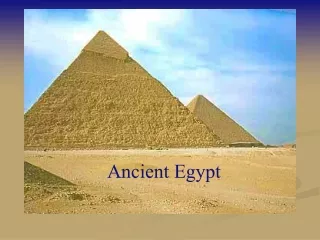
Ancient Egypt
Dive into the rich history of Ancient Egypt, focusing on its geographical layout, key historical regions, and the societal structure of ancient civilizations. This overview includes the importance of the Nile River and its delta, the roles of the Pharaohs, and the polytheistic beliefs surrounding death and the afterlife. Key archaeological evidence sheds light on the social and economic ties between Ancient Nubia and Egypt. Explore remarkable achievements like monumental architecture, hieroglyphic writing, and the invention of papyrus in shaping an enduring legacy.

Ancient Egypt
E N D
Presentation Transcript
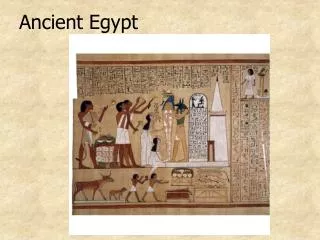
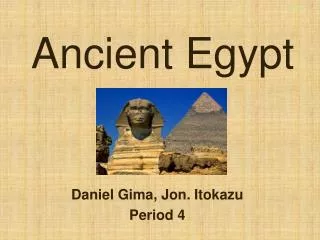
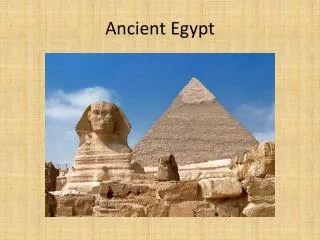
Standards • EGYPT: AN ANCIENT RIVER C, C. 3000–1200 BC/BCE • 7.12 On a historical map of the Mediterranean region, locate the Mediterranean and Red Seas, the Nile River and Delta, and the areas of ancient Nubia and Egypt. Identify the locations of ancient Upper and Lower Egypt and explain what the terms mean. On a modern map, identify the modern countries of Egypt and Sudan. (G) • 7.13 Describe the kinds of evidence used by archaeologists and historians to draw conclusions about the social and economic characteristics of ancient Nubia (the Kingdom of Kush) and their relationship to the social and economic characteristics of ancient Egypt. (H, G) • 7.14 Describe the role of the pharaoh as god/king, the concept of dynasties, the importance of at ancient Egypt. (H, C) • 7.15 Describe the polytheistic religion of ancient Egypt with respect to beliefs about death, the afterlife, mummification, and the roles of different deities. (H) • 7.16 Summarize important achievements of Egyptian civilization. (H) • -Agriculture system • -Invention of calendar • -monumental architecture and art such as great Pyramids and Sphinx at Gaza • -hieroglyphic writing • -the invention of papyrus