Ancient Egypt
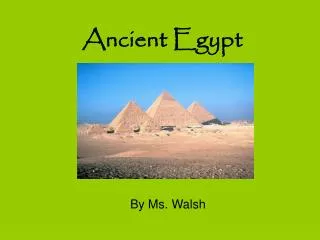
Explore the fascinating elements of Ancient Egyptian civilization, from their iconic pyramids and the enigmatic Sphinx to their rich polytheistic beliefs and sophisticated societal structures. Ancient homes, typically constructed from mud bricks, lined the banks of the Nile River, while agriculture thrived as a result of seasonal floods. The Egyptians' reverence for the afterlife led to elaborate mummification practices and grand tombs adorned with jewels and treasures. Delve into their daily life, culture, religion, and contributions to the world.

Ancient Egypt
E N D
Presentation Transcript
Ancient Egypt By; Colin Roddy, Joe Wiesman, Issac, Neil Perry
Culture-Homes- • Ancient Egyptian homes were built out of bricks made from mud • Homes were typically built along the Nile river
Culture-Food- • Grains • Fish • Vegetables • Fruits • Red Meats
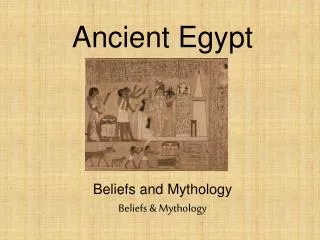
Culture-Religion- • Polytheistic (worships many gods) • Formal religious practice centered on the Pharaoh (the king of Egypt) who people believed to be a living god • Mythology • Cats sacred and respected animals • Mummification prepared the body for afterlife
Culture-Clothing- • Light clothing made from plant fibers, predominantly linen • Animal skins were sometimes worn by priests and by Pharaohs • Tunics, shirts, kilts, aprons and sashes, socks, head-dresses, caps, scarves, gauntlets and gloves were found in Tutankhamen's tomb
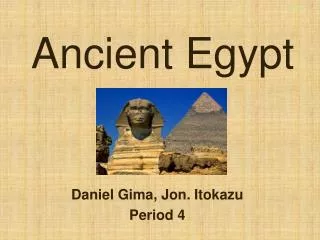
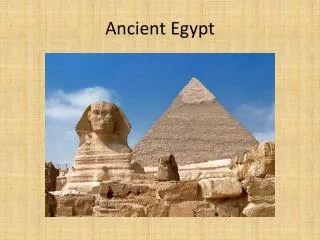
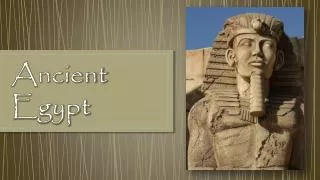
Culture-Sphinx- • Figures of lionesses with female human heads • Carved out of the bedrock with stone hammers and copper chisels • No nose
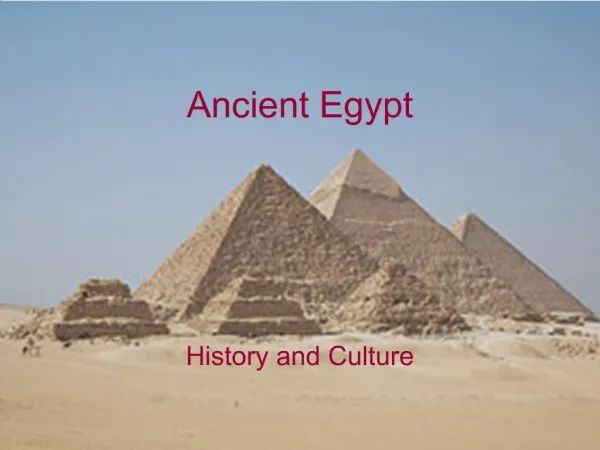
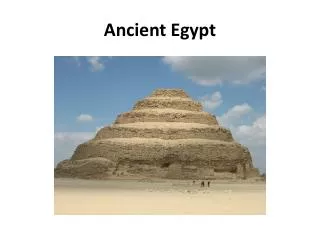
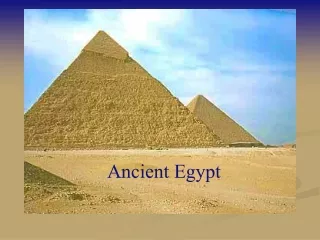
Culture-Pyramids- • 138 Pyramids discovered in Egypt • Most were built for tombs of Pharaohs • Pharaohs and wealthy families were buried in tombs and buried with their valuables • Gold • Jewels • Possessions
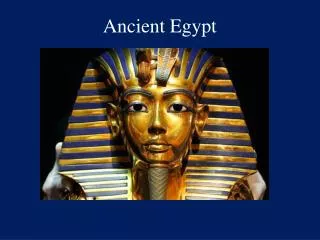
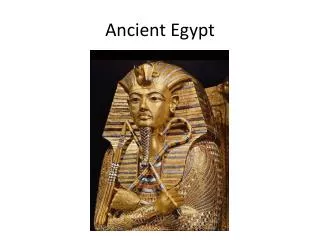
King Tut • Egyptian Pharaoh of the 18th dynasty • His original name Tutankhaten means Living Image of Aten
Geography • Egypt is located on the continent of Africa. • Ancient Egypt's climate was very hot and dry. • The ancient Egyptians farmed and irrigated the land near the Nile River. • Ancient Egypt was 90 percent desert • The Nile River floods every year and this brings rich soil for planting.
Geography Continued • The Nile River was used by the ancient Egyptians for many things. • Fished for food • Washed themselves • Collected water for irrigation • Drinking and cooking. • They also traveled by boat around Egypt and into the Mediterranean Sea to trade with other cultures.
Timeline • 5000BC- Earliest evidence of Egyptian Civilization • 3100BC- Earliest Evidence of Hieroglyphics in Egypt • 3000BC- Earliest evidence of worship of sun • 2700-1640BC- Pyramid Building
Timeline Continued • 1550-1070BC- Temple building period • 1367-1350BC- Abandoned polytheistic converted to monotheistic • 66AD- Riots in Egypt • 395AD- Egypt ruled by Byzantine empire
Politics • The head of the government was the Pharaoh • Pharaoh had limitless power and control over their subjects • Had government officials • Governors over specific pieces of land that
Politics Continued • Ancient Egypt was run with very strict rules that were made by the Pharaoh • For example and eye for and eye was used to bring justice to criminals
Contributions • Glass • Linen • Paper and ink • The calendar • The clock • Geometry and the alphabet
Citations http://www.ancient-egypt-online.com/ancient-egypt-government.html http://www.mnsu.edu/emuseum/prehistory/egypt/religion/mummification.htm http://www.love-egypt.com/egypt-civilization.html http://www.fcps.edu/KingsParkES/technology/ancient/egypt.htm http://en.wikipedia.org/wiki/Egyptian_pyramids http://en.wikipedia.org/wiki/Sphinx http://www.reshafim.org.il/ad/egypt/timelines/topics/clothing.htm