
SlideServe
Menu
Préférences
© SlideServe · v2026

Phylum Porifera Sponges

jacie avatar
13 diapositives · 453 Views · Aug 31, 2014

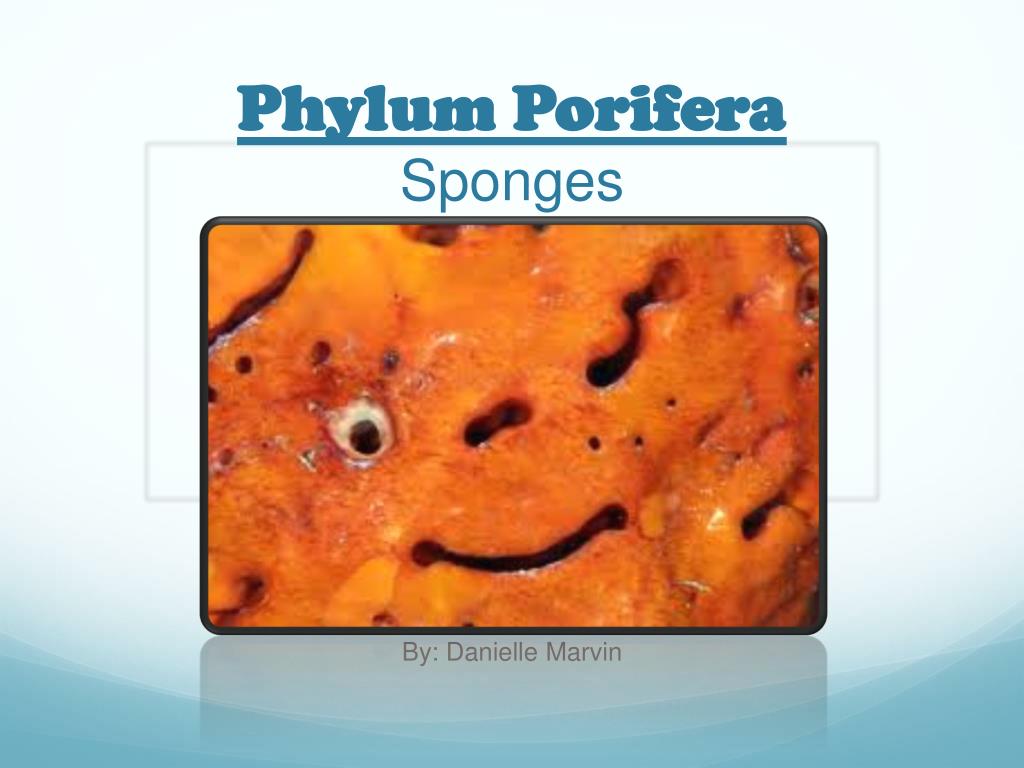
Phylum Porifera Sponges. By: Danielle Marvin. Key Characteristics. Feed by filtration Have unique cell type not found in other animal phyla (the Collar Cell) Tissues are loosely organized Possess no internal organs Have an internal meshwork of tiny fibers that acts like a skeleton.
Phylum Porifera Sponges - slide 1
01 / 13Phylum Porifera Sponges
1 / 17

Télécharger la présentation

Phylum Porifera Sponges
Une image / un lien ci-dessous est fourni (tel quel) pour télécharger la présentation

Politique de téléchargement : le contenu du site vous est fourni TEL QUEL pour votre information et votre usage personnel ; il ne peut être vendu, concédé sous licence ni partagé sur d’autres sites sans l’accord de son auteur.Le contenu vous est fourni TEL QUEL, pour votre information et votre usage personnel uniquement. Téléchargez la présentation en cliquant sur ce lien. Lors du téléchargement, si vous ne parvenez pas à télécharger une présentation, l’éditeur a peut-être supprimé le fichier de son serveur.Pendant le téléchargement, si vous ne parvenez pas à obtenir une présentation, le fichier a peut-être été supprimé par l’éditeur.

F I N

Plus de contenu associé

Transcription de la présentation
  1. Phylum PoriferaSponges By: Danielle Marvin

  2. Key Characteristics • Feed by filtration • Have unique cell type not found in other animal phyla (the Collar Cell) • Tissues are loosely organized • Possess no internal organs • Have an internal meshwork of tiny fibers that acts like a skeleton

  3. Anatomy • Has two outer layers • Layers separated by a single-cell gel layer called the mesohyl • Supportive needles/fibers in gel layer • No internal organs • None possess a backbone

  4. Digestion • No formal digestion system • Draw water in through pores • Brings it into central cavity lined with flagellum that keeps a current flowing • Food is captured by a ring of tentacles • Food is digested or moved into middle layer of body to be digested.

  5. Respiration • Have no formal respiration system. • Draw water in through pores • Use water to hydrate cells • Makes use of any food particles in the water • Releases water back out through pores

  6. Internal Transport • Have no formal internal transport system. • Everything is moved through the pores with tiny fibers. • In Asconoid sponges, movement canals go straight through the body (hollow bodied) • In Synconoidsponges, canals are branched instead of straight • In Leuconoid sponges, canals are longer and more complicated, leading off to little chambers and eventually, an exit.

  7. Excretion • Have no formal excretion system • Pass waste out through pores • Diffusion • Osmosis • Cell Transport

  8. Response • Have no nervous system • Have no sensory organs • Have no immune system • Release poisons to protect selves • These poisons cause threatening sponge to stop reproducing cells • In all, they don’t respond much.

  9. Movement • Swim in liquid as a baby sponge cell in the parent sponge • Move through parent’s pores into the water body • Float through the water until they settle on a surface (rock, other sponge, etc.) • Attach self to surface • Do not move again

  10. Reproduction • Reproduce asexually • Most sponges have both female and male parts • Cell-like embryo is formed • Becomes a free-swimming creature inside of it’s parent sponge • Is pushed out of parent’s pores to become it’s own sponge.

  11. Examples • Chalina (Mermaid’s Gloves) • Hippospongia (Horse Sponge) • Euplectella (Japanese Bridal Gift) • Hyalonema (Glass Rope Sponge) • Scypha (Crown Sponge)

  12. Facts • Over 5,000 species • 2% are freshwater • Smallest sponge can be only a millimeter tall at full growth height • Largest can be the size of a large wood barrel • One cubic centimeter of a sponge can filter over 20 liters of water in one day

  13. Literature Cited • http://www.earthlife.net/inverts/porifera.html • http://www.ebiomedia.com/prod/BOsponges.html • http://cfcc.edu/rogers/courses/msc174/Lectures/Phylum%20Porifera.pdf • http://www.enchantedlearning.com/subjects/invertebrates/sponge/ • http://animals.about.com/od/sponge1/p/porifera.htm • http://www.infusion.allconet.org/webquest/PhylumPorifera.html • http://kboyer.weebly.com/uploads/2/8/6/2/2862577/adv_bio_unit_2-_porifera_fact_sheet.pdf • http://www.ceab.csic.es/~maldonado/2008-Maldonado%26Riesgo-SocCatBiol.pdf • http://thephylumporiferaproject.wikispaces.com/