Ancient Egypt
80 likes | 201 Vues
Ancient Egypt, often referred to as the "gift of the Nile," witnessed profound transformations from 5000 BCE through the New Kingdom. The Nile's annual floods ensured fertile land for agriculture, supporting farming villages. Key milestones include Menes' unification of Egypt in 3100 BCE and the establishment of Memphis. The Old Kingdom saw the rise of pyramids, while the Middle Kingdom restored order following Hyksos invasions. The New Kingdom marked an era of unprecedented power, wealth, and cultural achievements such as hieroglyphics, papyrus, and monumental architecture.


Ancient Egypt
E N D
Presentation Transcript
Egyptian Geography • Nile: • Flows northward. • Floods on July. • Recedes in October. • Egypt as the “gift of the Nile.”
Political Development • 5000 BCE: Early Egyptians live in farming villages in Lower Egypt. • 3100 BCE: Menes unites all of Egypt. • Establishes the capital of Memphis. • 2660 BCE - 2180 BCE: Old Kingdom begins.
Political Development • 2180 BCE: End of Old Kingdom • 2080 - 1640 BCE: Middle Kingdom: • Pharaohs restore order. • 1640 - 1570 BCE: Egypt falls to the Hyksos.
Political Development • 1570-1090 BCE: New Kingdom. • Hatshepsut • Amenhotep • Tutankhamen • Unprecedented wealth and power.
Economic Development • Old Kingdom: • Slavery and Plantations. • Agriculture. • Middle Kingdom: • Trade with other nations. • Canal from the Nile to the Red Sea. • New Kingdom: • Expanded traded. • Wealth
Technology • Writing: • Hieroglyphics: • Picture stands for an idea. • Papyrus: • Reeds from the Nile. • Numbers. • Math. • Columns. • Calendar • Medicine
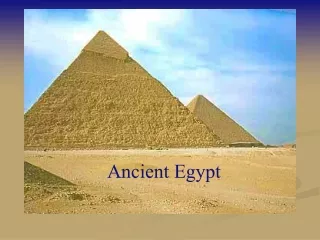
Cultural DevelopmentEgypt • Hieroglyphics • Papyrus • Numbers. • Math. • Columns. • Calendar • Medicine • Pyramids • Religion: • Polytheistic. • Pharaohs as gods. • Pyramids. • Social Pyramid: • Royal family -> wealthy landowners, government officials, priests, and army commanders -> merchants and artisans -> laborers and farmers -> slaves.