The Renaissance: A Cultural Revolution from the 14th to 17th Century
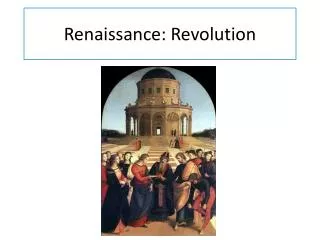
The Renaissance, meaning "rebirth," spanned the 14th to 17th centuries, beginning in Italy during the mid-1300s and reaching its peak in the 1500s. This transformative period witnessed a revival of interest in the culture of Ancient Rome and a flourishing of arts, literature, and sciences. Wealthy merchant classes and powerful city-states like Florence, Milan, and Venice played crucial roles. The Medici family, prominent patrons, pushed Florence into prominence, with figures like Leonardo da Vinci and Michelangelo leading the artistic charge, cementing the Renaissance's impact on Western civilization.

The Renaissance: A Cultural Revolution from the 14th to 17th Century
E N D
Presentation Transcript
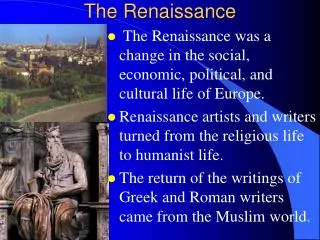
The Renaissance • “Rebirth” • 14th – 17th century (1300s – 1600s) • Began in Italy in the mid-1300s • Reached its height in the 1500s • Revolution = Change: political, social, economic, & cultural
Why Italy? • Reawakened interest in the culture of Ancient Rome • Wealthy, powerful merchant class • Italian city-states survived the Middle Ages (Florence, Milan, Venice, Genoa, Rome, and Naples) • Florence gifted poets, artists, scholars, and scientists • The Medici Family • became the richest merchants and bankers in Europe • gained control of Florentine government in 1434 • money translated into cultural and political power
Lorenzo de Medici • clever politician • held Florence together during difficult times • generous patron (financial supporter) of the arts • Poets, artists and philosophers frequently visited the Medici palace