The Gift of the Nile: Ancient Egypt's Rise and Cultural Legacy (3000-2000 BCE)
The Nile Valley, known for its gradual and predictable flooding, was crucial to the development of Ancient Egypt between 3000 and 2000 BCE. The unification of Egypt under legendary conqueror Menes established a centralized kingdom, with Memphis as its cultural and political hub, where the Pharaohs ruled with absolute power and divine claims. Monumental achievements like the Pyramids reflected the Pharaoh's authority, while innovations in writing through hieroglyphs enriched their culture. The belief in the afterlife led to mummification practices, ensuring eternal rewards for the moral.

The Gift of the Nile: Ancient Egypt's Rise and Cultural Legacy (3000-2000 BCE)
E N D
Presentation Transcript
The Gift of the Nile The Nile Valley, 3000-2000 BCE • Gradual, predictable flooding • Inundation (July-October) • Sprouting • Summer
Unification of Egypt • Legendary conqueror Menes, c. 3100 unifies Egyptian kingdom • Tradition: founder of Memphis, cultural and political center of ancient Egypt • Instituted the rule of the Pharaoh • Claimed descent from the gods • Absolute rulers, had slaves buried with them from 2600 BCE • Most powerful during Archaic Period (3100-2660 BCE) and Old Kingdom (2660-2160 BCE)
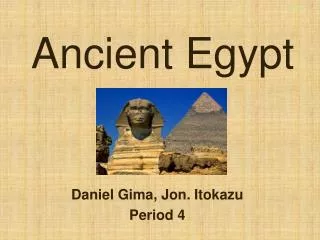
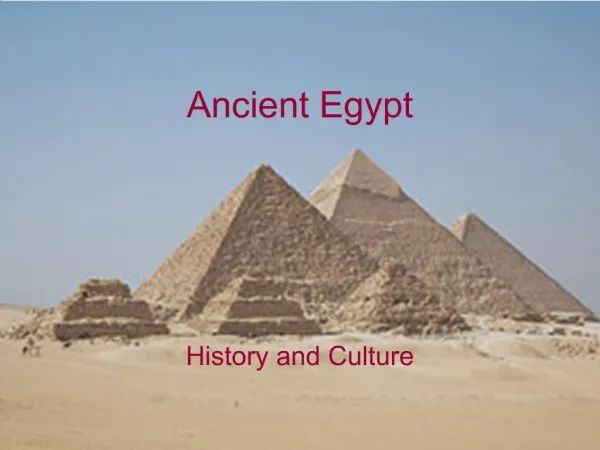
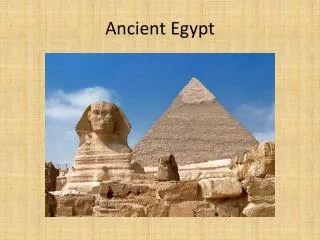
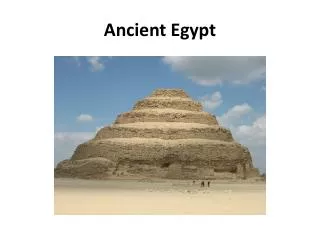
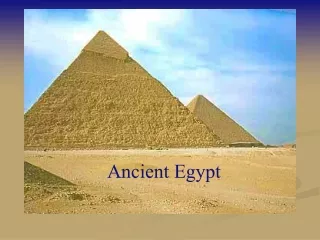
The Pyramids • Symbols of the pharaoh’s authority and divine status • A testimony of the pharaohs’ ability to marshal Egypt’s resources • Largest Khufu (Cheops) 2.3 M limestone blocks avg weight 2.5 tons • Role: burial chambers for Pharaohs
The New Kingdom Imperial Egypt, 1400 BCE • Few pyramids, but major monumental architectural projects • Engaged in empire-building to protect against foreign invasion • Invasions of Kushites, Assyrians destroy Egypt mid 6th century BCE
Hieroglyphs • “Holy Inscriptions” • Writing appeared at least by 3200 BCE • Pictographic supplemented with symbols representing sounds and ideas • Survives on monuments, buildings and sheets of papyrus
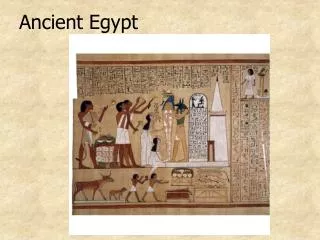
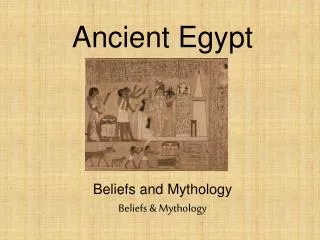
Mummification and the Afterlife • It was inspired by the cycles of the Nile • Belief in the revival of the dead • First: ruling classes only, later expanded to include lower classes • Cult of Osiris • Lord of the underworld • Power to determine who deserved immortality • Held out hope of eternal reward for those who lived moral lives