
The Evolution of Engineering Graphics: From Ancient Babylon to Modern CAD Systems

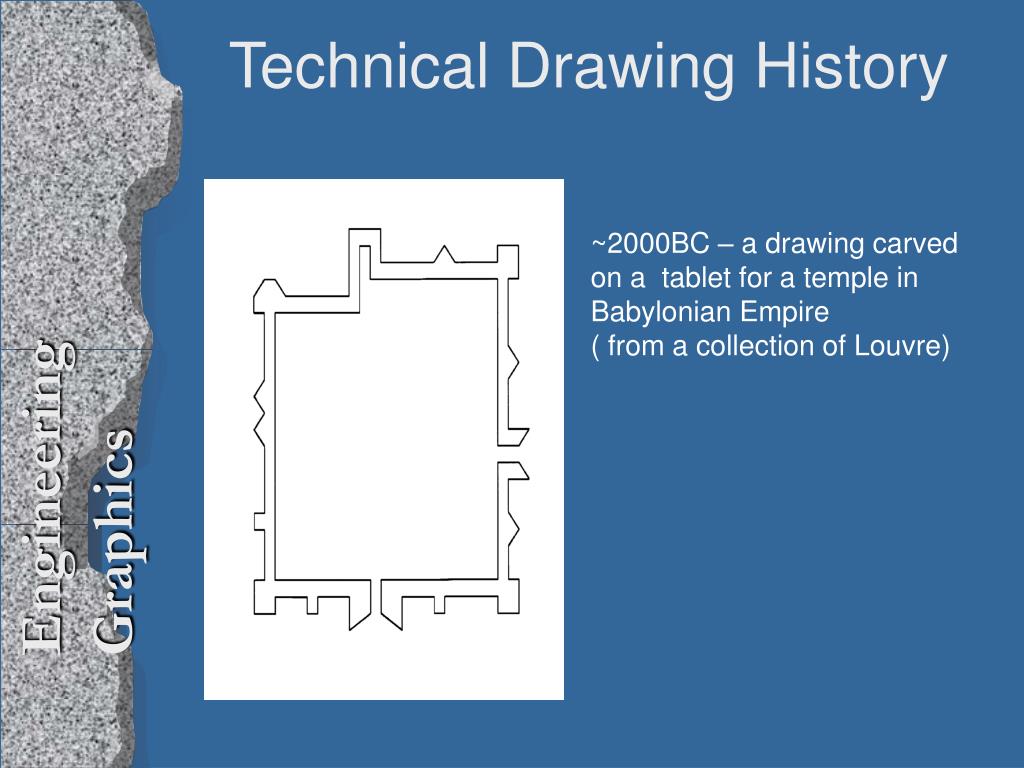
Technical drawing dates back to around 2000 BC, with a carved tablet from the Babylonian Empire showcased at the Louvre. The Renaissance period (1300-1500) saw the introduction of perspective drawing techniques, while the Industrial Revolution (1750-1850) brought parallel projection methods. The 1980s marked the development of 2-D CAD systems, leading to 3-D CAD advancements in the 1990s. Notably, the Boeing 777 was the first jetliner to be fully digitally designed, revolutionizing the aerospace industry. Concurrent engineering has emerged as a critical practice in the 21st century.
Télécharger la présentation 
Politique de téléchargement : le contenu du site vous est fourni TEL QUEL pour votre information et votre usage personnel ; il ne peut être vendu, concédé sous licence ni partagé sur d’autres sites sans l’accord de son auteur.Le contenu vous est fourni TEL QUEL, pour votre information et votre usage personnel uniquement. Téléchargez la présentation en cliquant sur ce lien. Lors du téléchargement, si vous ne parvenez pas à télécharger une présentation, l’éditeur a peut-être supprimé le fichier de son serveur.Pendant le téléchargement, si vous ne parvenez pas à obtenir une présentation, le fichier a peut-être été supprimé par l’éditeur.
F I N