Understanding U.S. Meat Consumption Patterns and Their Influencing Factors
This comprehensive analysis delves into the consumption patterns of meat in the United States, highlighting significant annual averages, such as 197 lbs of meat consumed per American, with 63.5 lbs of beef, 84.9 lbs of chicken, and 48.2 lbs of pork. It discusses the factors affecting consumption fluctuations, including pricing, media perceptions, and health outbreaks, such as H1N1 and salmonella. The report also projects changes in consumption patterns influenced by rising feed costs and economic factors impacting the pork industry.

Understanding U.S. Meat Consumption Patterns and Their Influencing Factors
E N D
Presentation Transcript
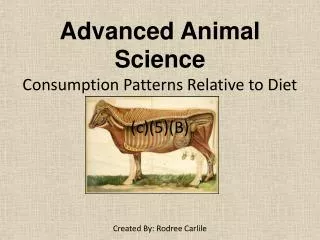
Advanced Animal Science Consumption Patterns Relative to Diet(c)(5)(B)Created By: RodreeCarlile
Objectives • Define what a consumption pattern is. • Evaluate consumption patterns relative to diet.
Overall U.S. Meat Consumption • On Average, Americans Consume 197 lbs of meat annually. • %of beef consumed in diet. 63.5 pounds • % of Chicken consumed in diet. 84.9 pounds • % of pork consumed in diet. 48.2 pounds
Pork • Pork is one of the most widely eaten meats in the world, • Accounts for about 38% of meat production worldwide • United States consumed 9 million tons in 2007. • Consumption increased by 18% from 2006 worldwide.
Total U.S. beef Consumption Consumption Growth 2002: 27.9 billion pounds2003: 27.0 billion pounds 2004: 27.8 billion pounds 2005: 27.8 billion pounds 2006: 28.0 billion pounds 2007: 28.1 billion pounds 2008: 27.3 billion pounds 2009: 26.9 billion pounds*Mad Cow Epidemic
Consumption Fluctuation • Caused by: • Price – as price per lbs. increases consumption will decrease. • Perception- media refers to “Pork the other white meat” causing fluctuation in consumption. • Outbreaks- swine flu, Salmonella and mad Cow. • Availability-supply and demand
Swine Flu(H1N1) • The 2009 flu pandemic was a global outbreak of a new strain of H1N1 influenza virus, often referred to as "swine flu". • Despite being informally called "swine flu", the H1N1 flu virus cannot be spread by eating pork or pork products
H1N1 Effects • The U.S. pork industry suffered through one of its • worst economic times in nearly 20 years. • Producers lost $22 for every animal marketed, according to Iowa State University • In November and December losses were estimated to be $40 and $45 per head, • Overall, it is estimated that producers have lost 35 percent of their equity
Salmonella • August 2010- authorities ordered more than half a billion eggs off the shelves at American supermarkets due to fears of salmonella. • It was one of the largest salmonella outbreaks ever recorded in the U.S • Later the FDA recalled 500 million more eggs produced by two closely-linked farms.
Effects • Egg consumption in America declined do to the outbreak. • The outbreak has caused many consumers to think twice before purchasing eggs. • Producers were required to recall over 380 million eggs.
Mad Cow • Known as:Bovine spongiform encephalopathy • Causes a spongy degeneration in the brain and spinal cord. • BSE has a long incubation period, about 30 months to 8 years • Affects adult cattle at a peak age onset of four to five years • All breeds being equally susceptible
Projections • Annual per capita consumption of red meats and poultry falls from 223 pounds in 2007 to a projected low of 213 pounds in 2012 • This is anticipated, do to higher feed cost. • In years to come, the USDA projects thatnredmeats and poultry will resume growth • Projections estimate a per capita gain reaching about 219 pounds in 2016.
Global Prospective • Where We Stand.
Review • Objectives: • Define what a consumption pattern is. • Evaluate consumption patterns relative to diet.