
SlideServe
Menu
Préférences
© SlideServe · v2026

Cytoskeleton

nubia avatar
7 diapositives · 662 Views · Jul 22, 2014

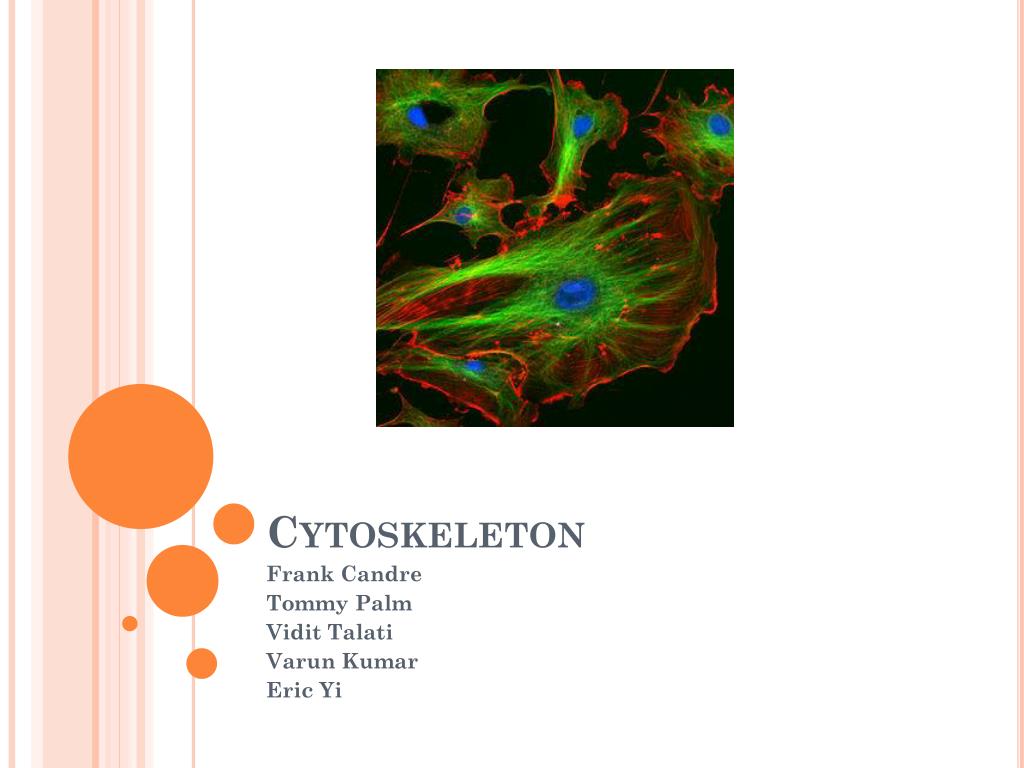
Cytoskeleton. Frank Candre Tommy Palm Vidit Talati Varun Kumar Eric Yi. Structure. Microtubules (Tubulin Polymer) Microfilaments (Actin Filaments) Intermediate Filaments. Function. Give mechanical support to the cell and maintain its shape
Cytoskeleton - slide 1
01 / 7Cytoskeleton
1 / 17

Télécharger la présentation

Cytoskeleton
Une image / un lien ci-dessous est fourni (tel quel) pour télécharger la présentation

Politique de téléchargement : le contenu du site vous est fourni TEL QUEL pour votre information et votre usage personnel ; il ne peut être vendu, concédé sous licence ni partagé sur d’autres sites sans l’accord de son auteur.Le contenu vous est fourni TEL QUEL, pour votre information et votre usage personnel uniquement. Téléchargez la présentation en cliquant sur ce lien. Lors du téléchargement, si vous ne parvenez pas à télécharger une présentation, l’éditeur a peut-être supprimé le fichier de son serveur.Pendant le téléchargement, si vous ne parvenez pas à obtenir une présentation, le fichier a peut-être été supprimé par l’éditeur.

F I N

Plus de contenu associé

Transcription de la présentation
  1. Cytoskeleton Frank Candre Tommy Palm ViditTalati Varun Kumar Eric Yi

  2. Structure • Microtubules (Tubulin Polymer) • Microfilaments (Actin Filaments) • Intermediate Filaments

  3. Function • Give mechanical support to the cell and maintain its shape • Important in animal cells because they lack cell walls • Provides anchorage for many organelles and even cytosolic enzyme molecules • Interaction between cytoskeleton with motor proteins can assist in cell motility (cilia and flagella) • Manipulates the plasma membrane in a way that forms food vacuoles or other phagocytic vesicles • Cytoskeletal transmission of naturally occurring mechanical signals may help regulate and coordinate the cell’s response

  4. Microtubules • Structure: Hollow tubes; wall consists of 13 columns of tubulin molecules • Diameter: 25nm with 15-nm lumen • Protein Subunits: Tubulin, a dimer consisting of alpha-tubulin and beta-tubulin • Main functions: maintenance of cell shape (compression resistant “girders”), cell motility (movement), chromosome movements in cell division, organelle movements

  5. Microfilaments • Structure: Two intertwined strands of actin proteins, each a polymer of actin subunits • Diameter: 7 nm • Protein Subunits: Actin • Main Functions: Maintenance of cell shape (tension-bearing elements), changes in cell shape, muscle contraction, cytoplasmic streaming, cell motility (as in pseudopodia), cell division (cleavage furrow formation)

  6. Intermediate Filaments • Structure: Fibrous proteins supercoiled into thicker cables • Diameter: 8-12 nm • Protein Subunits: One of several different proteins in the keratin family, depending on cell type • Main Functions: Maintenance of cell shapes (tension-bearing elements), anchorage of nucleus and certain other organelles, formation of nuclear lamina

  7. Interesting Links • Cytoskeleton Explanation • Cytoskeleton Rap