Punctuation
This guide explores key features of Spanish punctuation and accentuation, including the unique placement of question and exclamation marks (¿, ¡), the importance of accent marks for syllable emphasis (á, é, í, ó, ú), and the tilde over "n" (ñ) that denotes a distinct sound. It also addresses the use of diaeresis (ü) to modify vowel pronunciation and highlights the differences in formatting numbers, where commas and decimals are reversed from English norms. Master these essentials for better comprehension and communication in Spanish!

Punctuation
E N D
Presentation Transcript
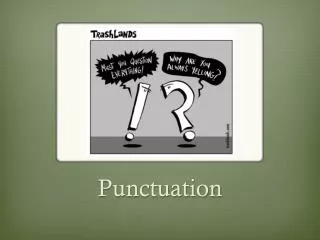
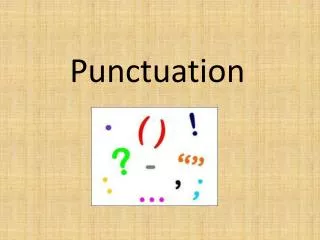
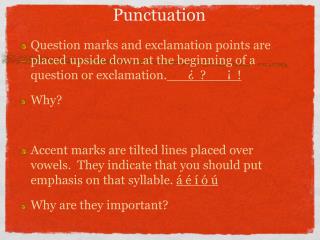
Punctuation • Question marks and exclamation points are placed upside down at the beginning of a question or exclamation. ¿ ? ¡ ! • Why? • Accent marks are tilted lines placed over vowels. They indicate that you should put emphasis on that syllable. á é í ó ú • Why are they important?
A wavy line over the letter “n” is called a tilde. “ñ” = “ny” in canyon • You may sometimes (not often) see the letter “u” with two dots over it. To pronounce this letter in “pingüino,” you would say “peen-gwee-noh.” Without the two dots, it would be pronounced “peen-gee-noh.” • Commas and periods in numerals are opposite of what we are used to in English. • $1.50=1,50 1,234,567=1.234.567