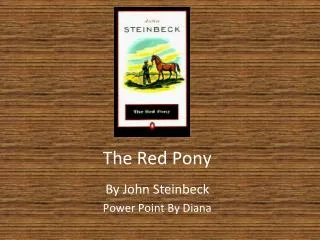
The Red Pony: A Reflection on John Steinbeck’s Literary Legacy and the Legacy of Rodeo
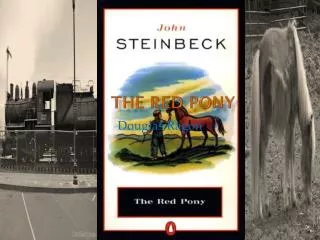
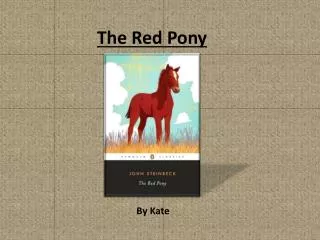
John Steinbeck, born in Salinas, California in 1902, wrote “The Red Pony,” a beloved children’s story. He is celebrated for his literary contributions, including 27 books, earning the Nobel Prize in Literature in 1962. This also intertwines with the rich history of Salinas, particularly its thriving rodeo culture. The California Rodeo Salinas, which celebrated its 100th anniversary in 2010, exemplifies community spirit and tradition. The challenges of crop farming during the 1930s and care for horses also highlight the enduring agricultural roots of the region.


The Red Pony: A Reflection on John Steinbeck’s Literary Legacy and the Legacy of Rodeo
E N D
Presentation Transcript
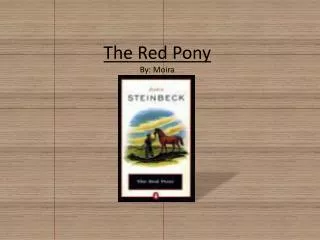
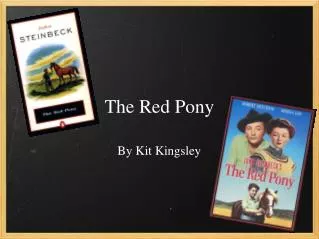
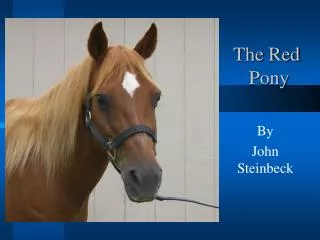
The Red Pony By; Sport
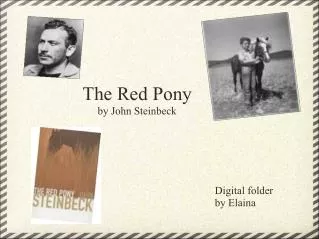
John Steinback • He was born in Salinas, California on February 27, of 1902. • In 1937 he wrote a total of 27 books, 16 novels, 6 non-fiction, and 9 short stories. • In 1962 he won the Nobel peace prize for Literature. • In my opinion I think that John Steinback is a very good writer of children's stories like The Red Pony.
History of Salinas • The Rodeo itself is designed to operate like a two-ring circuit with each rodeo performance featuring events that occur in the arena and on the track simultaneously.
History of Salinas • The California Rodeo Salinas will celebrate 100 Years of Tradition, July 15-18, 2010. Big Week will be bigger than ever this year offering something for every member of the family and a chance for the entire community to participate in the California Rodeo.
Ranching • It took a long time to grow a crop by hand in the 1930s. • I took a long time to grow the crops by hand. Is it hard to grow a crop? Yes. • It was hard work to grow a crop because you had to do it by hand.
The 1930’s • The 1930’s are nicknamed the dirty 30’s because of the huge dust bowl. • 250,000 teenagers were criss-crossing countries and living on the streets of all cities or towns. • The presidents back in the dirty 30s were Herbert Hoover and Franklin Delano Roosevelt. • There was hard times back then.
The Care of Horses • Plain wire fencing is fine if it is well-secured to strong wooden posts. Build the barn so the back wall faces the prevailing wind. A watering trough, supplied by a pipe, is better, but must be checked during winter weather. • Straw is a popular bedding choice because it is inexpensive.
The Care of Horses • Use rubber matting for a soft resting and standing surface. • Sweep, and then clean the floor with a stable disinfectant. Return the clean bedding to its place, then add fresh bedding material. • The natural oils in its coat help to keep your horse warm.