Download
1 / 33
330 likes | 436 Vues
Explore the cell cycle, chromosomes, mitosis, and more in this informative guide. Learn about DNA replication, homologous pairs, and stages of cell division. Witness the miracle of life with detailed explanations and visuals. Perfect for students and biology enthusiasts.

E N D
Chromosomes • Chromosomes are condensed strands of ____________. • Many, many ____________ fit on one chromosome.
Chromosomes • The tips of the chromosomes are called ____________. • Chromosomes are bound in the middle with ____________. • The long arm of a chromosome is the _____ arm. • The short arm of a chromosomes is the _____ arm.
Weight Height Eye Color Hair Color Genes • A ____________ is a section of a chromosome that codes for a specific ____________.
Tall Medium Brown Eyes Blue Eyes Blonde Red Hair Homologous Pair Chromosomes • Each cell has _____ of each kind of chromosome. • They aren’t exactly alike, but they code for the same ____________. • These are called ____________ ____________.
Chromosomes • Usually chromosomes are all jumbled up. This is called ____________. • Only just before division do they condense down into ____________ chromosomes.
SIMILAR IDENTICAL Chromosomes • Before a cell ____________, the ____________ must duplicate as well. • The two halves of the duplicated chromosomes are called ____________ ____________. They are ____________ alike.
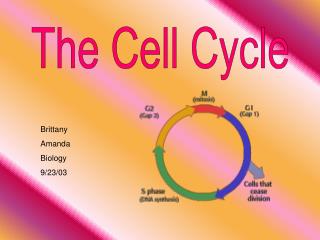
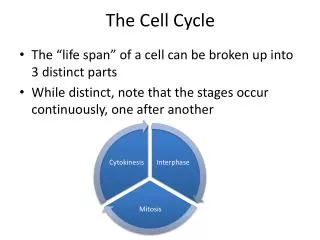
Periods of the Cell Cycle • G1 and G2 – ____________ • S – ____________of DNA • M – ____________(Cell Division) _______________
Cell Division • ____________– Growth and repair • ____________– Creation of sex cells (____________) • ____________ ____________ – Cell division in prokaryotes like bacteria
Mitosis • ____________ division • Duplicated chromosomes are evenly distributed into two ____________ cells • Purposes: • ____________ of single-cell organisms (i.e. amoebas) • ____________ repair • Cell ____________ • ____________ ____________ (i.e. bone lengthening)
Mitosis • All ____________ cells (non-gametes) in an organism have the same number of ____________ and undergo mitosis. • The chromosome number is characteristic of a given ____________ (e.g.humans 46, goldfish 94). • ____________ cells have 2 sets of chromosomes – ____________.
Mitosis • Daughter cells are the ____________ ____________ of the parent cell (they have the same number of ____________ ) • Parent cells are ____________, or ____ – this means they have 2 of each chromosome • After mitosis daughter cells will be ____ as well (if a cell is ____________ or n, it did not go through mitosis – it went through ____________) • If a cell grasshopper’s gland is 2n=24, it has _____ chromosomes • After mitosis the daughter cell will have ____ chromosomes.
____________ • ____________(Mitosis) • ____________(Mitosis) • ____________(Mitosis) • ____________(Mitosis) Let's watch an animation!
Interphase • G1 Phase - First growth phase • 2 pairs of ____________ begin forming • S Phase - DNA is “____________” (chromosomes are ____________) • Each chromosome now consists of 2 replicas called ____________ ____________ held together at the ____________ • ____________ needed for replication produced
Interphase • G2 Phase - second growth phase • Proteins made for division • Completion of replication of ____________ pairs • Cell ____________ and ____________ activities • 90% of time
Prophase • ____________ condenses to form ____________ ____________ • ____________ disappears • Nuclear ____________ breaks down
Spindle Apparatus • Forms during ____________ • Made of ____________ • Spindle fibers pull ____________ where they need to go • Centrioles/____________ at each pole (animals cells) • ____________: region of the cell that organizes the spindle. • Some cancer medications interfere with the formation of a cancer cell’s ____________. So, the ____________ can’t form and the cancer cell can’t go through mitosis.
Metaphase • ____________ formation complete • Chromatids line up at cell's ____________ ____________.
Anaphase • ____________ split • Sister ____________ separate into separate ____________ – ____________ as many chromosomes now! • Chromosomes are drawn to ____________/centrosomes
Telophase • 2 new ____________ • Nuclear ____________ re-forms • ____________ reappears • ____________ disassembles
Cytokinesis • Division of ____________ into 2 daughter cells • Animal cells: ____________ ____________ forms and pinches cell in two • Plant cells: ____________ ____________ forms at equator of cell
Mitosis Let's watch the whole process now. Source: http://highered.mcgraw-hill.com/olc/dl/120073/bio14.swf