Understanding Density: Exploring Mass, Volume, and Temperature Effects
This text discusses the concept of density, comparing a pound of lead to a pound of feathers to illustrate that they weigh the same. It explains the formula for density (mass/volume) and the common units used (g/mL, g/cm³, g/L). The piece also explores how temperature affects density, noting that most substances decrease in density as temperature rises, but water is a unique exception. It highlights the implications of density regarding water behavior, such as ice floating and the potential dangers of frozen pipes in winter.


Understanding Density: Exploring Mass, Volume, and Temperature Effects
E N D
Presentation Transcript
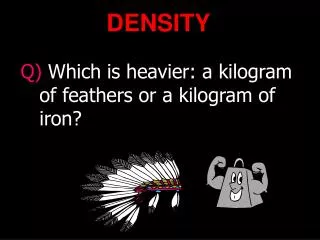
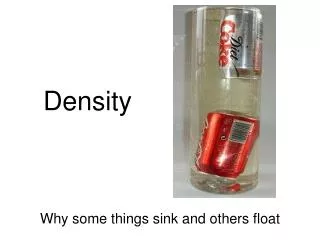
Density • Which is heavier- a pound of lead or a pound of feathers? • Most people will answer lead, but the weight is exactly the same • They are normally thinking about equal volumes of the two • The relationship here between mass and volume is called Density
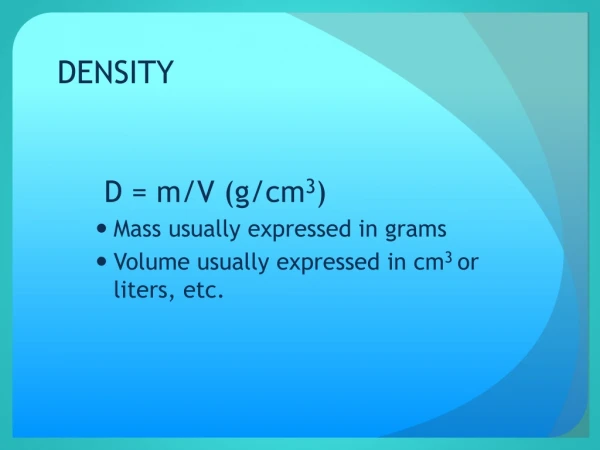
Density • The formula for density is: mass volume • Common units are: g/mL, or possibly g/cm3, (or g/L for gas) • Density is a physical property, and does not depend upon sample size Density =
Note temperature and density units - Page 90
Density and Temperature • What happens to the density as the temperature of an object increases? • Mass remains the same • Most substances increase in volume as temperature increases • Thus, density generally decreases as the temperature increases
Density and Water • Water is an important exception to the previous statement. • Over certain temperatures, the volume of water increases as the temperature decreases (Do you want your water pipes to freeze in the winter?) • Does ice float in liquid water? • Why?