Detection of T790M Mutation in EGFR Exon 20 Using PNA Clamp-Based Real-Time PCR
This study presents a method for detecting the T790M mutation in the EGFR exon 20 region through a PNA clamp-based TaqMan real-time PCR approach. Genomic DNA is fragmented and hybridized with a biotinylated probe specific to EGFR exon 20, followed by purification of single-stranded DNA using streptavidin magnetic beads. A PNA clamp selectively inhibits the amplification of wild-type alleles, allowing for specific detection of the T790M mutation using a TaqMan probe. This methodological framework enhances mutation detection accuracy and efficiency.

Detection of T790M Mutation in EGFR Exon 20 Using PNA Clamp-Based Real-Time PCR
E N D
Presentation Transcript
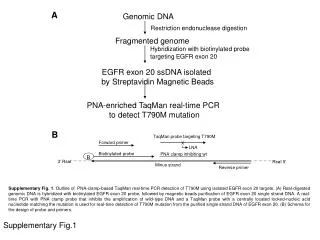
A Genomic DNA Restriction endonuclease digestion Fragmented genome Hybridization with biotinylated probe targeting EGFR exon 20 EGFR exon 20 ssDNA isolated by Streptavidin Magnetic Beads PNA-enriched TaqMan real-time PCR to detect T790M mutation B B TaqMan probe targeting T790M Forward primer X LNA Biotinylated probe PNA clamp inhibiting wt 3’ RsaI RsaI 5’ Minus strand Reverse primer Supplementary Fig. 1. Outline of PNA-clamp-based TaqMan real-time PCR detection of T790M using isolated EGFR exon 20 targets. (A) RsaI-digested genomic DNA is hybridized with biotinylated EGFR exon 20 probe, followed by magnetic beads purification of EGFR exon 20 single strand DNA. A real-time PCR with PNA clamp probe that inhibits the amplification of wild-type DNA and a TaqMan probe with a centrally located locked-nucleic acid nucleotide matching the mutation is used for real-time detection of T790M mutation from the purified single strand DNA of EGFR exon 20. (B) Schema for the design of probe and primers. Supplementary Fig.1