Regulation of Trans-α-Bergamotene Emission in Nicotiana Attenuata Leaves
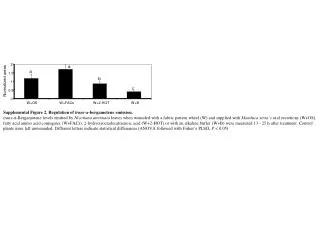
This study examines the levels of trans-α-bergamotene emitted by *Nicotiana attenuata* leaves after different wounding treatments, including mechanical wounding with a fabric-pattern wheel and exposure to saliva from the herbivore *Manduca sexta*. Additional treatments with fatty acid amino acid conjugates, 2-hydroxyoctadecatrienoic acid, and an alkaline buffer were also evaluated. Emission levels were measured between 13 to 25 hours post-treatment, with statistical differences analyzed using ANOVA and Fisher’s PLSD (P < 0.05) compared to control plants.

Regulation of Trans-α-Bergamotene Emission in Nicotiana Attenuata Leaves
E N D
Presentation Transcript
2 a a 1.5 b Normalized areas 1 c 0.5 0 W+OS W+FACs W+2-HOT W+B Supplemental Figure 2. Regulation of trans-a-bergamotene emission. trans-a-Bergamotene levels emitted by Nicotiana attenuata leaves when wounded with a fabric pattern wheel (W) and supplied with Manduca sexta’s oral secretions (W+OS), fatty acid amino acid conjugates (W+FACs), 2-hydroxyoctadecatrienoic acid (W+2-HOT) or with an alkaline buffer (W+B) were measured 13 - 25 h after treatment. Control plants were left unwounded. Different letters indicate statistical differences (ANOVA followed with Fisher’s PLSD, P < 0.05)